
Our Process
How chimney joints are repointed in Astor Farms
How worn chimney joints are found
Visual observation and light scraping with a metal tool are the usual ways to find joints that need repointing. Sound mortar resists the tool. Mortar that has lost its bond powders, flakes or lifts out in pieces, and a joint can look intact from the ground while the mortar behind its surface has turned to sand.
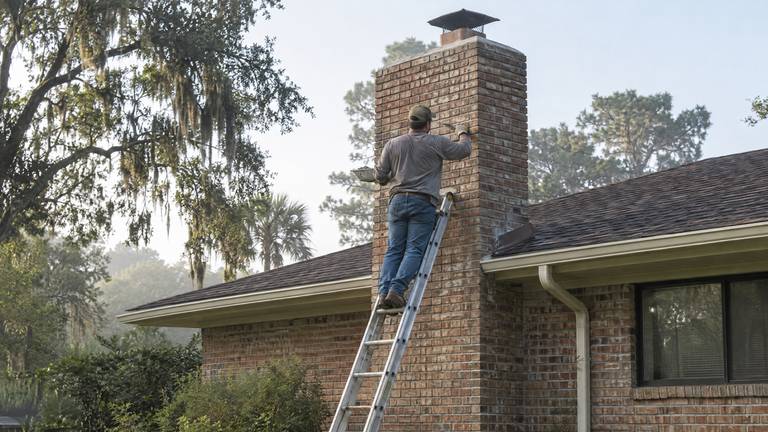
Our pros check the joints up close from the roof and from the ground, because the top of a chimney and its lower courses can wear at different rates. The result is a map of the joints that need work, described on the estimate by face and area instead of as a vague allowance.
Letting new mortar joints weather in
Even a well-matched repair looks newer than the joints around it for a while. The Park Service brief explains that new mortar is matched to the unweathered portion of the old, and that sand shows more on old joints as their surface erodes. Its advice for a properly matched mortar is to let it age naturally.
The same brief generally advises against staining new mortar to force a match, because old and new joints may weather at different rates. We tell you what to expect in the first months, so the fresh look of a new repair on your Astor Farms chimney is not mistaken for a mismatch.
Hairline mortar cracks and face grouting
For very fine cracks in otherwise sound joints, Technical Note 46 describes face grouting, where a thin grout of cement, lime and fine sand is brushed into the cracks, usually in two coats. The note warns that the joints look slightly wider and smoother afterwards, and says repointing is generally recommended because it corrects more kinds of deterioration.
We mention face grouting when a chimney genuinely fits it and explain the change in appearance before you decide. Where the mortar is soft, recessed or hollow, grouting will not hold, and repointing is the repair we quote.
Grit on the roof and gaps between bricks
Mortar that is washing out leaves clues. Sandy grit collects on the roof below the chimney or on the ground at its base, joints look recessed behind the brick faces, and in places a shadow line opens between a brick and the mortar beside it.
None of those signs tells you how deep the damage goes. The free inspection does. Our local specialists check the joints close up and tell you whether the chimney needs a few joints repointed, a full face or a different repair altogether.


