
Our Services
Chimney leak repair from the top down
Local specialists, upfront pricing and a 100% satisfaction guarantee on every leak repair in Astor Farms.
Checking entry points from the top down
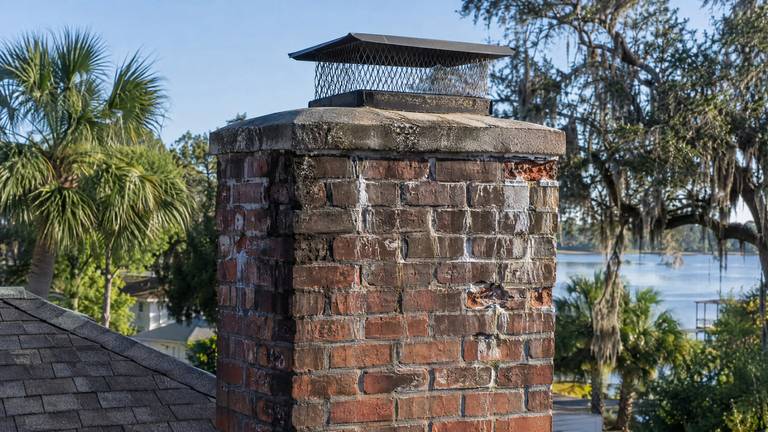
Water travels downhill, so the search starts at the chimney top. We check the cap and the flue opening first, next the crown and the joint at the flue tile, then the brick and mortar, and last the flashing where the chimney meets the roof.
Following that order stops us from repairing something low while the real entry sits higher up, and it catches chimneys that leak in two places at once. Each finding is recorded with how strongly the evidence points to it, so the estimate starts with the likely cause and does not overlook the others.
Keeping rain out of the flue with a cap
Without a cap, rain falls straight down the flue onto the damper and the smoke shelf. A cap with a solid lid and a screen stops that water and keeps animals out.
The cap must leave enough open area for exhaust to leave freely, and the Florida Building Code sets that area for rain caps on masonry chimneys. We fit caps sized to the flue and fasten them so storms do not lift them. On a chimney with several flues, a single cap that covers them all can be the simpler answer.
Crickets behind wide chimneys
On the uphill side of a wide chimney, a cricket divides the flow of water and sends it around the chimney. The Florida Building Code requires a cricket on any chimney wider than 30 inches, measured parallel to the ridge, that does not meet the ridge.
Without a cricket, leaves collect and water backs up against the flashing in heavy rain. Adding one involves framing, roofing and flashing work, so we explain how that work would be coordinated and what each part would cost before anything is scheduled.
A drip edge that throws rain clear
When a crown stops flush with the chimney face, water runs straight down the brick. A crown that overhangs with a drip edge breaks that flow and drops the water clear of the wall.
When we rebuild a crown, the overhang and drip edge are formed as part of the new work. On an existing crown with no overhang, we explain whether a rebuild or another detail would reduce the water reaching the faces, and what each option would change.


