
Chimney Services
Sealing, repairing and rebuilding the crown
Our experts check the crown, the flue joints and the brick below before recommending any repair in Astor Farms.
What the crown does at the top of the chimney
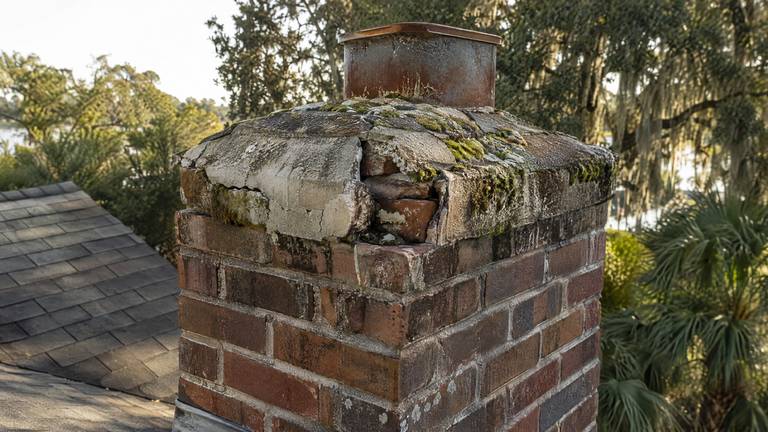
Around the flues at the top of a masonry chimney sits a slab of concrete or mortar, the crown. It meets the rain first and should throw it clear of the brick. In Florida Building Code terms it is a cap of concrete, metal or stone, pitched to shed water, edged with a drip and kept apart from each flue liner by a caulked bond break.
Once the crown cracks or loses its slope, water gets into the upper brick, reaches the flue joints and eventually shows up at the fireplace or on a ceiling. Repairing it early usually keeps the job to the crown alone.
An overhang with a drip edge
Water that runs off the crown should fall clear of the brick instead of running down the face. A crown that projects past the brick with a groove or edge underneath, called a drip, breaks the path of the water so it drops away.
Masonry chimney tops need a drip edge under the Florida Building Code. Where a crown has no overhang, the Brick Industry Association suggests corbeling the top two courses of brick outward to form one. When we rebuild a crown, the overhang and drip are formed into it from the start.
Reinforcement against shrinkage cracks
Concrete shrinks as it cures, and a crown on a chimney also moves with daily heating and cooling. The Brick Industry Association treats shrinkage in a cast-in-place cap as a certainty and recommends reinforcement to help control cracking, with extra in the overhang.
When we form a new crown, reinforcement goes in before the concrete, sized to the crown and kept clear of the edges. That will not make a crown crack-proof, but it keeps fine cracks from opening into gaps that let water through.
How a crown rebuild goes
A rebuild starts with protecting the roof and the flue openings. The failed crown is broken out down to sound masonry, loose top brick is reset, and a form is built to give the new crown its thickness, overhang and drip.
Reinforcement and bond breaks go in, the concrete is placed and shaped to slope, and the forms come off once it can hold its shape. We clean up the roof, show you the finished top and explain the curing time before the fireplace is used again.


