
Our Process
How we replace a chase cover in Astor Farms
Measuring a chase that is rarely square
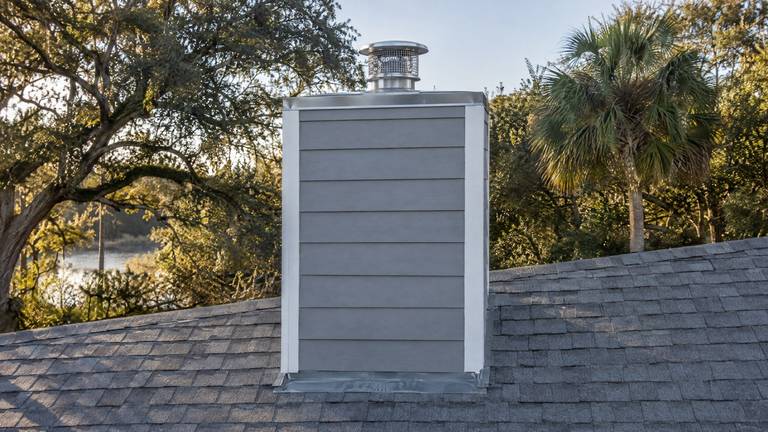
Framed chases are built on site, and few of them finish perfectly square. A cover ordered from nominal dimensions can bind on one side and leave a gap on another. We measure each face at the top, check the diagonals and record where the pipe sits relative to the edges. Our specialists also note the siding at the top edge, because the turndown has to lap over it cleanly on every face.
The new cover is fabricated to those numbers, with the collar placed over the actual pipe position. You see the measurements and the proposed metal on the written estimate before fabrication starts.
Covers for a chase with more than one pipe
Some chases carry two pipes, for example a fireplace chimney beside the vent of another appliance. Each opening needs its own raised collar and storm collar, and the spacing and heights of the terminations follow each system's instructions rather than whatever the old cover allowed.
We map every penetration before fabrication. If one of the pipes serves equipment another trade looks after, we note it on the estimate so the new cover suits both systems. Each termination keeps its own listed cap, and the storm collars are sealed pipe by pipe. The estimate shows how many openings the new cover has and where they sit.
Tracing water in a factory-built firebox
Water on the floor of a factory-built fireplace can come from the chase cover, the storm collar, the termination cap, the siding or the roof flashing at the base of the chase. A new cover fixes only the first of those. Our pros also read the pattern of the water inside the firebox, since a drip down the pipe and a stain on the back wall point to different sources.
We check the path from the top down, beginning with the cap and storm collar and finishing at the roofline. The estimate for your Astor Farms property names the source we found and any other defect we saw, and a new cover is proposed only when the cover is at fault.
When a patch is enough and when it is time to replace
A single small hole in otherwise sound metal can sometimes be sealed as a short-term measure. Widespread rust, a sagging sheet or a collar that has separated are different, because the metal has reached the end of its useful life and patches tend to fail at their edges.
We explain which situation your cover is in. If a patch is the right call for now, the estimate describes it as temporary, so you know what you are paying for and how far to rely on it.


