
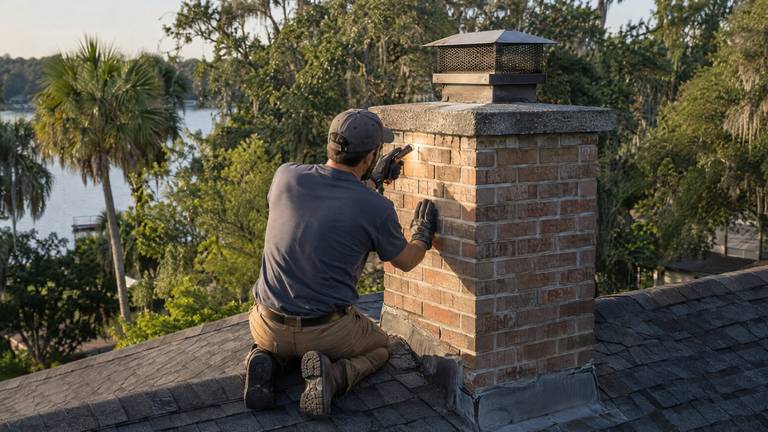
Chimney Inspection
Chimney inspection details for Astor Farms homes
No pressure after the visit, and every recommended job is priced in writing before you decide.
When a closer examination is called for
NFPA 211 asks for a more thorough examination at certain moments. These include the sale or transfer of a property, a change to the appliance connected to the chimney, plans to reline the flue and damage from a storm or another event.
In those situations the accessible parts of the chimney deserve more attention than a routine look through the opening. We tell you in advance what the visit will reach, including attic or crawl space areas that can be entered without removing permanent parts. If a concealed section matters to the decision in front of you, we explain what it would take to see it.
Cap, screen and how the cap is fastened
A chimney cap keeps rain from falling straight into the flue and gives birds and animals a barrier. We check that the cap is present, fastened securely, free of heavy rust and clear of leaves or debris that could restrict the flow of exhaust.
The screen matters as much as the lid. A torn mesh lets animals in, and a clogged one holds back smoke. We also look at how the cap is attached, since a cap resting loosely on the tile can lift in a storm. If the cap should be replaced, we explain the size and material that suit the flue and price the replacement on its own line.
Each flue and the appliance it serves
A chimney with more than one flue can serve a fireplace, a furnace, a water heater or an opening that is no longer used. Each flue is inspected for the appliance it serves, since each has different requirements.
We confirm which flue belongs to which appliance where that can be traced and note any flue that is no longer connected. An unused flue still needs a cap or a closure to keep out rain and animals. When one flue has been left serving a smaller appliance on its own, we explain whether its size still suits that appliance.
Stucco finishes over the chimney
A stucco finish covers the masonry or framing beneath it, so damage may show only as fine cracks, stains or a hollow sound when the surface is tapped.
We look closely at the finish around the crown, along the roof line and at the corners, where movement and water meet. Where the finish is damaged, we explain whether it looks like a surface repair or a sign of water behind it. A stucco repair that seals over wet material only hides the problem, so the source of the water comes first.


