
Our Process
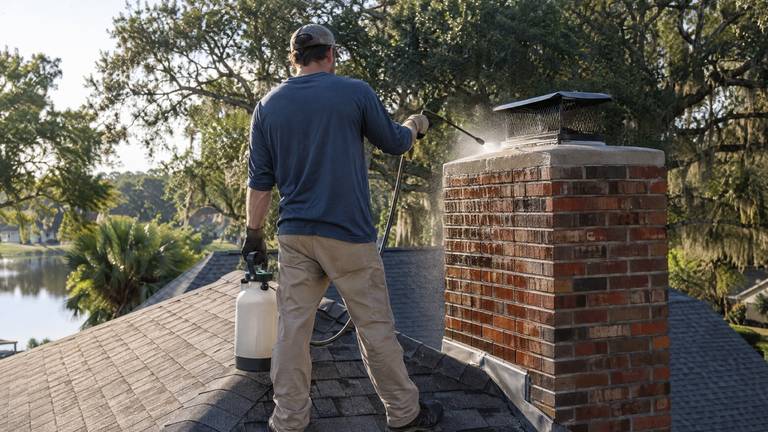
Waterproofing a chimney in Alderene Park, in detail
Why a chimney repellent has to breathe
Water vapor transmission is the most important property to weigh when choosing a coating for exterior brick, according to Technical Note 6A. Coatings with low vapor transmission slow evaporation and can trap water inside the brickwork, which leads to clouding of the coating and deterioration of the brick itself.
Whatever moisture gets into a chimney has to be able to leave again, through the same face it came in by. That is why we choose repellents made to stay vapor permeable and avoid sealers that close the surface, even when a glossy finish is what a homeowner first pictures. You get the product information for whatever goes on your Alderene Park chimney.
The cracks a repellent cannot bridge
Penetrating repellents line the pores. They do not fill gaps. Technical Note 6A says they seldom stop water penetration through cracks more than 0.02 inch wide, roughly the thickness of five sheets of copy paper, and that their effectiveness under wind-driven rain is limited.
Cracks wider than that need a repair of their own, whether that is repointing, brick replacement or stucco repair. Our specialists look for them on every face during the free inspection, because a repellent sprayed over an open crack leaves the water path in place. Where a hairline sits in otherwise sound mortar, we explain whether it needs work or can be left alone.
A test area before the whole chimney
Manufacturers and the Brick Industry Association both recommend testing first. Instructions for a water-based siloxane repellent ask for a small test area on each type of surface before general application, and Technical Note 6A suggests treating half of a test area that shows the full range of brick colors so treated and untreated brick can be compared.
On your Alderene Park chimney we pick an area you can see from the ground, treat it and let it dry before the rest is done. You judge the look with your own eyes, and the rest of the chimney is treated only after you agree.
How a treated chimney looks afterwards
A penetrating repellent is chosen partly because it changes the look of masonry so little. The ChimneySaver data sheet describes natural color and texture as unaffected, with little or no gloss, while noting that dense surfaces may darken slightly and that stains already on the masonry may darken.
Film formers behave differently, and Technical Note 6A warns that an unwanted sheen can signal a poorly chosen or poorly applied coating. We tell you what to expect on your brick, and the test area shows you before the full application. If you were hoping for a darker, wet look, we explain why the breathable option keeps the brick closer to its natural color.


