
Our Services
Leak repair details for chimneys in Woodruff Springs
Local specialists, upfront pricing and a 100% satisfaction guarantee on every leak repair in Woodruff Springs.
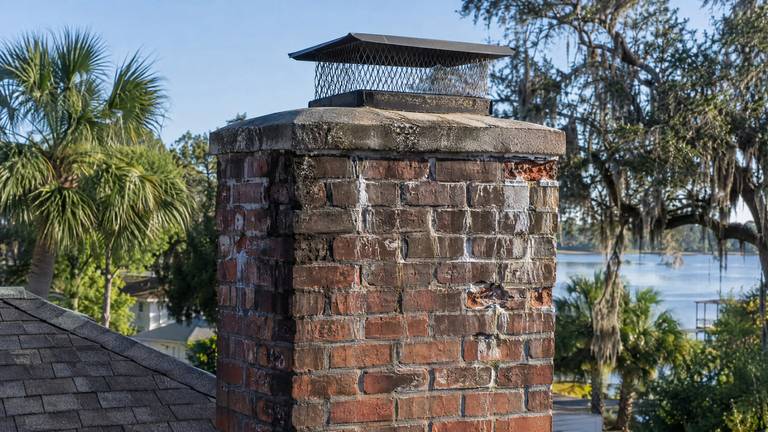
Keeping rain out of the flue with a cap
Without a cap, rain falls straight down the flue onto the damper and the smoke shelf. A cap with a solid lid and a screen stops that water and keeps animals out.
The cap must leave enough open area for exhaust to leave freely, and the Florida Building Code sets that area for rain caps on masonry chimneys. We fit caps sized to the flue and fasten them so storms do not lift them. On a chimney with several flues, a single cap that covers them all can be the simpler answer.
Cracks in a stucco finish
Stucco sheds most rain, but cracks near the crown, at corners and along the roof line let water behind it. Once inside, water can soak the masonry or framing below without showing on the surface.
We sound the finish for hollow areas and look for stains below the cracks. Surface cracks can be patched and sealed. Where water has damaged what lies beneath, the finish is opened and the substrate is repaired first, because a new coat over wet material only hides the problem for a while.
Chase covers that hold water
A metal chase cover on a factory-built chimney should shed water off its edges. When it sags or was installed flat, water sits in the middle and rusts through the metal.
One manufacturer's instructions ask for a chase top that falls away from the pipe opening so water drains off. We replace rusted or flat covers with ones shaped to shed water, sized to the chase and fitted with a collar. The replacement is measured on site, so the new cover fits the chase rather than a standard size.
Why a closed damper does not stop a leak
Closing the damper keeps water from reaching the room directly, but the water is still entering the chimney above it. It collects on the damper plate and the smoke shelf, where it rusts metal and softens mortar out of sight.
A closed damper can also hide how bad a leak has become. We open it during the inspection to see what has collected there, and the repair is aimed at the entry above rather than at keeping the water contained below.


