
Our Process
How chimney joints are repointed in Woodruff Springs
How worn chimney joints are found
Visual observation and light scraping with a metal tool are the usual ways to find joints that need repointing. Sound mortar resists the tool. Mortar that has lost its bond powders, flakes or lifts out in pieces, and a joint can look intact from the ground while the mortar behind its surface has turned to sand.
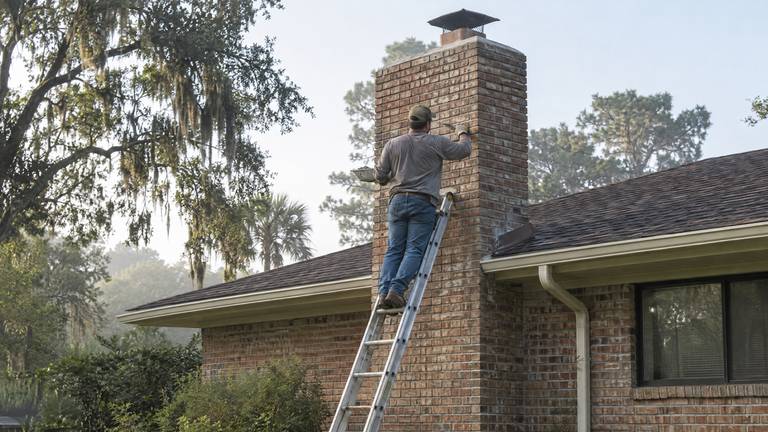
Our pros check the joints up close from the roof and from the ground, because the top of a chimney and its lower courses can wear at different rates. The result is a map of the joints that need work, described on the estimate by face and area instead of as a vague allowance.
Repointing mortar no stronger than the old
Stronger mortar is not better mortar for repointing. Technical Note 46 requires the repointing mortar to be no higher in compressive strength than the original, since a harder joint pushes stress onto the edges of the brick and can spall its face.
In practice the mix is chosen for the chimney in front of us. Our specialists look at the brick, the existing joints and any earlier repairs before recommending a mortar type, and the estimate names it. If a past repair used a hard mix that is already damaging the brick, we show you where.
Prehydrating the repointing mortar
Repointing mortar is mixed differently from the mortar used to lay brick. The dry ingredients are combined first, then just enough water is added for the mix to hold its shape when squeezed into a ball. After it rests for 1 to 1 1/2 hours, more water brings it to a consistency that is still drier than laying mortar.
Technical Notes 8B and 46 both describe this prehydration step, and the reason is shrinkage. A drier, rested mortar packs tightly into the joint and shrinks less as it sets, which means fewer hairline gaps along the brick edges. It adds time to the job, and it belongs in the job.
A damp patch indoors, traced to the joints
A stain on the wall or ceiling beside the chimney can come from open joints, a failed crown, loose flashing or a missing cap. Repainting the stain changes nothing until the entry point is found and repaired.
During the free inspection our specialists follow the water back from the stain to its likely source. If failed mortar is the path, the joints involved are marked for repointing. If the water is coming in somewhere else, you get that answer instead, with the right repair on the estimate.


