
Our Process
Waterproofing a chimney in Wekiwa Springs, in detail
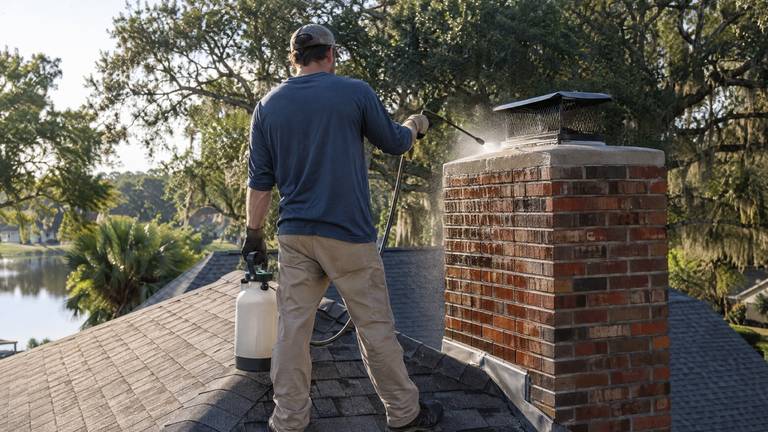
Cleaning the chimney surface before treatment
A repellent has to reach the pores to work. Manufacturer instructions for a siloxane chimney repellent call for clean, structurally sound, visibly dry surfaces, with dust, dirt, grease, efflorescence, old coatings and other foreign matter removed first, since they can block or interfere with penetration.
The cleaning method has to suit the masonry, because harsh cleaning can damage a surface or change how it takes the product. Our specialists choose the preparation for your Wekiwa Springs chimney and list it on the estimate, so a quick spray over dirty brick is never mistaken for waterproofing.
White salt deposits and waterproofing
White efflorescence on brick is salt carried to the surface by water. BIA efflorescence guidance says the cause is usually moisture and that reducing water penetration comes before removing the deposits. Technical Note 6A adds that salts can become trapped under a film-forming coating or a low-permeability repellent and damage the brick.
So the water that carried the salts is traced first, and the deposits are removed before any treatment. Efflorescence that weathering leaves behind can usually be dry brushed away, according to the same guidance. Only then do we consider a breathable repellent for your chimney.
Chimney surfaces that stay untreated
Some parts of a chimney should not get a masonry repellent. One manufacturer's instructions rule out asphalt-based materials and painted or glazed brick, and describes the product for exterior, above-grade masonry, which leaves out the flue lining and the metal flashing.
We mask what should stay untreated and treat only the surfaces the product is made for. If the cap, flashing or crown needs work, that is quoted as a repair on its own line.
Painting a chimney after it has been treated
According to the ChimneySaver data sheet, surfaces treated with that repellent may be painted with a high quality oil-based paint, and testing is always necessary to confirm adhesion and compatibility.
If painting is in your plans, tell us before treatment. We factor it into the product choice for your Wekiwa Springs chimney, so the two layers work together instead of against each other. Paint is a surface film, so it changes how the chimney dries, which Technical Note 6A treats as a real concern on exterior brick.


