
Our Process
How we replace a chase cover in Wekiwa Springs
A top shaped to drain instead of pool
Rust holes in a chase cover tend to start in the low spots where rain sits after a storm, because a flat or sagging sheet holds water against the metal for hours. Manufacturer instructions call for the top to slope down and away from the pipe opening, and the Majestic manual sets that fall at a minimum of 1/4 inch per foot.
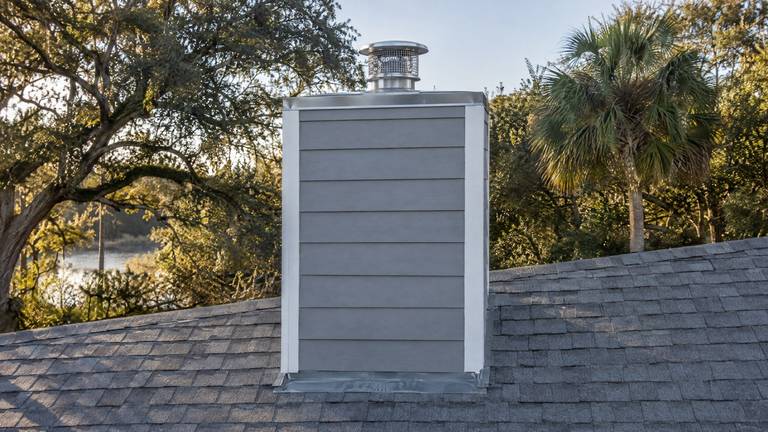
A new cover for a chase in Wekiwa Springs is formed with the fall built in, often with diagonal cross breaks that turn a flat sheet into a shallow pyramid. Water then runs to the edges and leaves over the drip edge. The bends also stiffen the sheet, so the cover keeps its shape when someone works near it during later service.
Where the cover skirt meets the siding
The turndown of a chase cover laps over the top edge of the wall covering, whether that is lap siding, panels or a stucco finish. That junction decides whether water leaving the drip edge falls away or finds a path behind the siding. Stucco needs particular care at that edge, since a crack there lets water behind the finish.
When we measure for the replacement, we note the siding type and its condition at the top course. Cracked trim, open joints or failed stucco at that line are pointed out during the free inspection, so the new cover never goes on over a leak it cannot stop.
Putting the correct cap back on the pipe
The termination cap on a factory-built chimney belongs to the listed system. The Majestic manual, for example, calls for a cap approved and listed for that fireplace system. A universal cap from a hardware aisle is a different product, even if it seems to fit the pipe.
When your cover is replaced, the existing cap goes back on if it is sound. If it is damaged, we identify the correct replacement part for your model before quoting it, so the top of the chimney on your Wekiwa Springs home ends up as the manufacturer intended.
When a home inspection flags the chase top
Home inspectors frequently note rusted or damaged chase covers because the streaks are easy to see from the ground. A line in a report is a starting point. It does not say what the repair involves or whether the deck below has been affected.
Our team inspects the chase top free and provides a written scope and price that buyers and sellers can both read. If the work has to be done before closing, tell us the date when you call so fabrication can be planned around it.


