
Chimney Services
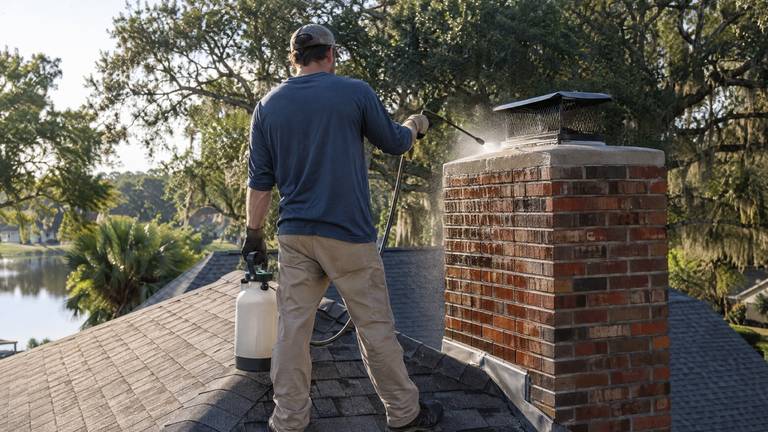
Inside a chimney waterproofing job in Wagner
The weather window for a water repellent
Repellents have application limits, and the product's maker sets them. One chimney repellent's data sheet asks for surface and air temperatures between 40 and 100 degrees F for three hours after application, no application to wet or saturated surfaces, and no application when rain is expected within six hours unless the surface is protected.
Our crew plans your Wagner job around those limits. If rain is due or the brick is still wet from a morning shower, the application moves to a better day, since a repellent applied outside its conditions may not perform as its maker intends.
How a treated chimney looks afterwards
A penetrating repellent is chosen partly because it changes the look of masonry so little. The ChimneySaver data sheet describes natural color and texture as unaffected, with little or no gloss, while noting that dense surfaces may darken slightly and that stains already on the masonry may darken.
Film formers behave differently, and Technical Note 6A warns that an unwanted sheen can signal a poorly chosen or poorly applied coating. We tell you what to expect on your brick, and the test area shows you before the full application. If you were hoping for a darker, wet look, we explain why the breathable option keeps the brick closer to its natural color.
Brick, stone and stucco chimneys
Each masonry material needs a product made for it. Technical Note 6A stresses selecting only coatings intended for clay brickwork when treating brick, and notes that coatings formulated for other materials may even harm brick. The ChimneySaver data sheet lists clay brick, mortar, natural stone and portland cement stucco among the surfaces it is made for.
Our specialists identify what your Wagner chimney is built from before choosing a product. A cracked stucco chimney gets stucco repair first, and a stone chimney is checked joint by joint, since a repellent protects sound surfaces and leaves open gaps exactly as they were.
Visibly dry brick on the day of treatment
Dew, a passing shower or an overflowing gutter can leave brick damp even under a clear sky. The ChimneySaver instructions ask for visibly dry surfaces and rules out wet or saturated masonry, while Technical Note 6A notes that some siloxanes and silanes tolerate slightly damp surfaces.
Our crew checks the brick on each face before starting and waits for wet areas to dry, following the instructions for the product being used. That patience is part of a treatment that works.


