
Our Services
How we inspect a chimney from top to bottom
Here is what our chimney professionals look at during a free inspection in Wagner.
Factory-built units and their listing
A factory-built fireplace and its metal chimney are tested and listed together, and the Florida Building Code requires them to be installed according to that listing. The data plate, often near the firebox or behind a panel, names the model.
Where we can reach the label, we record the model and check that the visible chimney parts match the system. Mixed parts from different makers are noted, because the listing covers only the combination that was tested. The model number also tells you which replacement parts and instructions apply if a repair is needed later.
Each flue and the appliance it serves
A chimney with more than one flue can serve a fireplace, a furnace, a water heater or an opening that is no longer used. Each flue is inspected for the appliance it serves, since each has different requirements.
We confirm which flue belongs to which appliance where that can be traced and note any flue that is no longer connected. An unused flue still needs a cap or a closure to keep out rain and animals. When one flue has been left serving a smaller appliance on its own, we explain whether its size still suits that appliance.
Getting the house ready for the visit
Keep the fireplace unused for a day before the visit so the firebox is cool. Clear a path to the fireplace and move anything fragile from the mantel and hearth.
If you have the owner's manual, earlier reports or receipts for chimney work, set them out. Tell us about locked gates, pets and roof access when you book. There is no need to take anything apart or to clean the fireplace first, since the ash and deposits help show how it has been used.
Reaching the chimney top safely
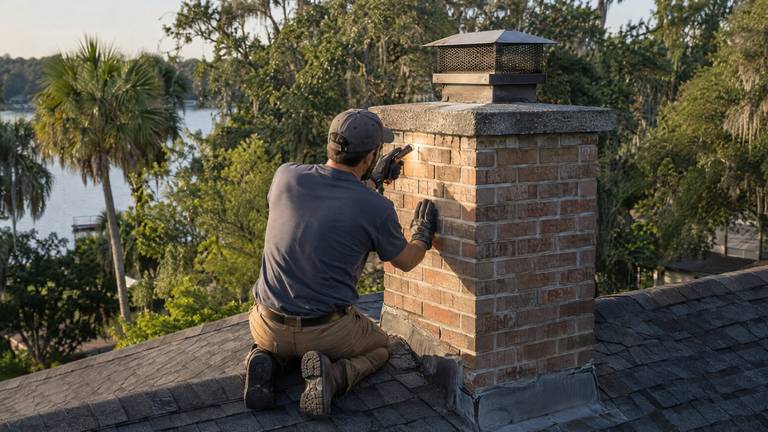
Much of an inspection happens on the roof, so access is planned before anyone climbs. Pitch, roofing material, wetness and the height of the chimney all affect how the top can be reached.
When the roof can be walked safely, we inspect the top directly. When it cannot, we use what can be seen from ladders and the ground and say plainly which items were not checked at close range. The findings never treat a part as sound simply because it was out of reach.


