
Our Services
How we repair chimney leaks in Taintsville
Our leak professionals work from the top down to find and fix the entry point on chimneys in Taintsville.
Counterflashing set into the masonry
Counterflashing covers the top edge of the base flashing. It is set into a mortar joint cut in the brick and laps down over the base flashing, so water on the chimney face cannot run behind it.
Counterflashing that was only glued to the face of the brick pulls away as the sealant ages. Our team cuts a proper slot into the joint, sets the new metal and seals it with mortar or a suitable sealant. The Brick Industry Association describes this detail for brick chimneys, and it outlasts a surface patch.
Open mortar joints
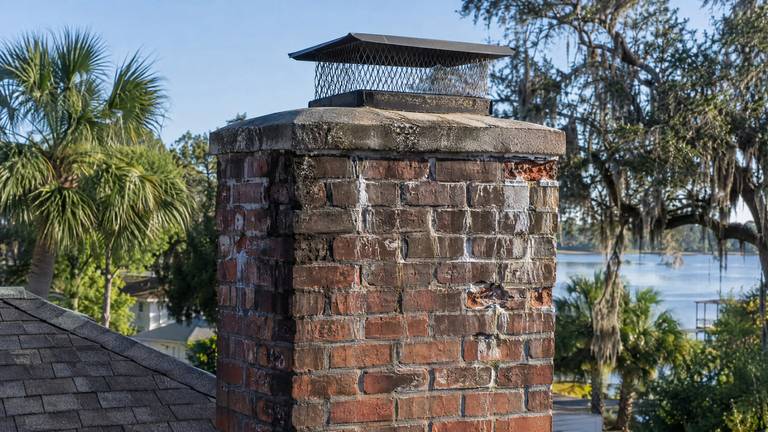
Mortar joints wear faster than the brick around them. Once they open, rain moves into the wall with every storm and comes out inside as dampness or stains.
Repointing removes the loose mortar to a sound depth and packs the joint with new mortar. The National Park Service advises that new mortar be softer and more vapor permeable than the brick, so the joints keep taking the wear instead of the brick faces. The mortar we use is chosen for your chimney's brick, never simply the strongest mix we could buy.
The storm collar around the pipe
On a metal chimney, the pipe rises through a hole in the chase cover, and a storm collar clamped around the pipe above that hole throws rain outward. If it slips or its seal fails, water runs down the outside of the pipe into the chase.
Chimney makers' instructions describe how the collar is fitted and sealed against the pipe. We reset or replace the collar to those instructions without sealing the openings the system needs for ventilation. It is a small part, and it is often the whole answer to a leak on a metal chimney.
Water repellents come after repairs
A breathable, penetrating water repellent can reduce how much rain sound brick absorbs. The Brick Industry Association advises considering such treatments only after the brick, the mortar joints and the other elements have been repaired.
Film-forming coatings can trap moisture inside the wall and push the brick face off. We use products that let vapor leave the masonry and apply them to the maker's instructions. A repellent is offered only where the brick needs it, and it is priced as a separate line from the leak repair itself.


