
Our Process
Chase cover work on Taintsville homes
The raised collar around the pipe opening
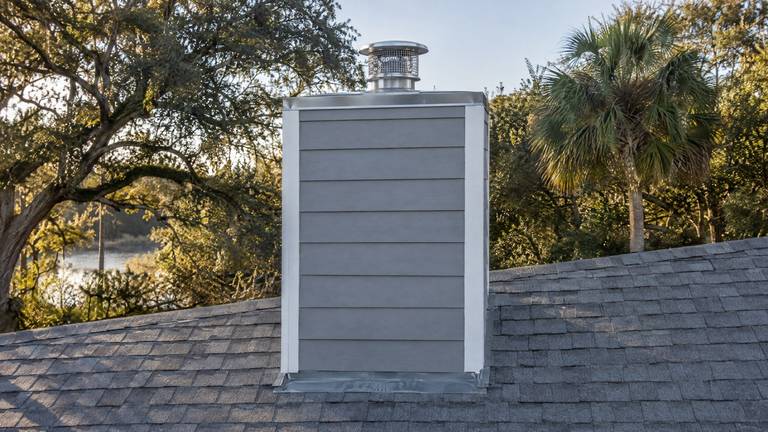
Where the chimney pipe passes through the cover, the hole is the most exposed point on the whole top. In the Majestic manual, that opening gets a collar, 2 inches tall, soldered, welded or spun so there is no open seam. Rain running across the cover meets the collar and flows around it.
An old cover with a short, cracked or loosely riveted collar can let water drop straight into the enclosure beside the pipe. Our pros check the collar height and joints on your current top and build the new collar to the height your system's instructions require.
Covers for a chase with more than one pipe
Some chases carry two pipes, for example a fireplace chimney beside the vent of another appliance. Each opening needs its own raised collar and storm collar, and the spacing and heights of the terminations follow each system's instructions rather than whatever the old cover allowed.
We map every penetration before fabrication. If one of the pipes serves equipment another trade looks after, we note it on the estimate so the new cover suits both systems. Each termination keeps its own listed cap, and the storm collars are sealed pipe by pipe. The estimate shows how many openings the new cover has and where they sit.
Checking the wood deck under the old cover
Many chases have a plywood or board deck that the metal cover rests on. After a cover has leaked for a while, that deck softens, the metal sinks into the soft spots and water collects faster. A new cover laid over rotten wood sags the same way.
Our specialists check the deck and top framing when the old cover comes off. If repair is needed, it appears as its own line on the estimate, so you can see what the chase top job includes and approve each part. Wood that is only surface-stained can stay, and wood that crumbles or flexes is replaced before the cover is set.
Clearing old tar, tape and caulk
Older covers often carry layers of roofing cement, tape or caulk from past attempts to stop a leak. Those patches trap water at their edges and hide the state of the metal beneath, and they make it hard to tell where the water was really getting in.
The patches come off with the old cover, and the top of the chase is cleaned before the new cover is set. The replacement keeps water out with its shape, collar and drip edge, with sealant used only at the seams and joints the instructions name.


