
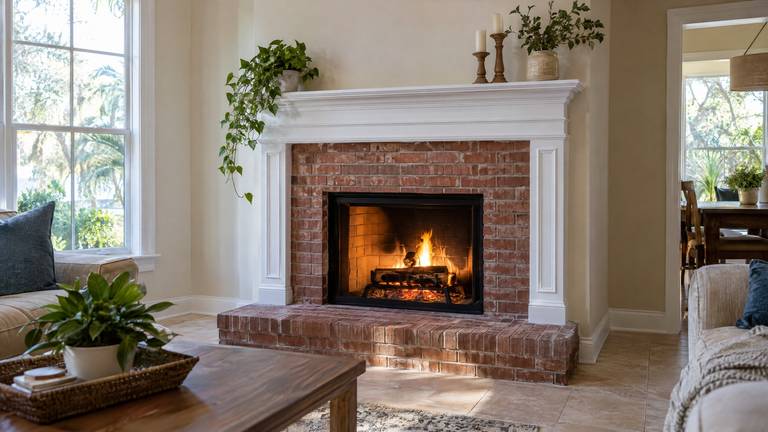
Fireplace Services
Fireplace insert installation details for Sanlando Springs homes
Your fireplace insert installation is 10% off when confirmed inside 72 hours of the inspection.
Finishing the liner at the chimney top
At the top of the chimney, the liner passes through a top plate that closes the old flue opening. One maker's instructions trim the plate to overlap the flue, fasten it to the liner, seal the gap with high-temperature silicone and finish with a rain cap.
Our installers complete that detail with the parts the liner system lists. A tight top plate keeps rain out of the old flue and keeps the warm liner centered, which protects both the insert and the chimney. We also check that the rain cap screen is clear and fastened before we come down from the roof.
Moving a heavy insert safely
Wood inserts are heavy, mostly because of their steel body and firebrick lining. One manual lightens the unit for moving by taking out the firebricks and the baffle first and refitting them in place.
The carry from the driveway to the hearth is planned, floors and door frames along the route are protected, and enough people come for the size of the unit. Every brick and baffle part goes back exactly where the manual shows. The carry is planned before installation day, so nothing is dragged across your floors.
Setting the insert level and square
An insert that leans makes the door hang poorly and the surround sit unevenly against the fireplace face. Old hearths are rarely flat, so the setting takes more care than it looks.
Our installers level the insert with noncombustible shims where the manual allows, square it to the opening and check the door swing and the surround gap before the liner is connected. A level insert also sits evenly against the hearth protection in front of it and looks built in.
What to use when lighting the insert
One insert manual says gasoline and other flammable liquids must never be used to start or freshen a fire. Small dry kindling and newspaper do the job without the risk.
We light the first fire with you, using the method your model's manual describes. You see how the air settings change as the fire catches and how to keep it burning cleanly from the start. The same match-and-kindling method works for every fire after the first.


