
Our Process
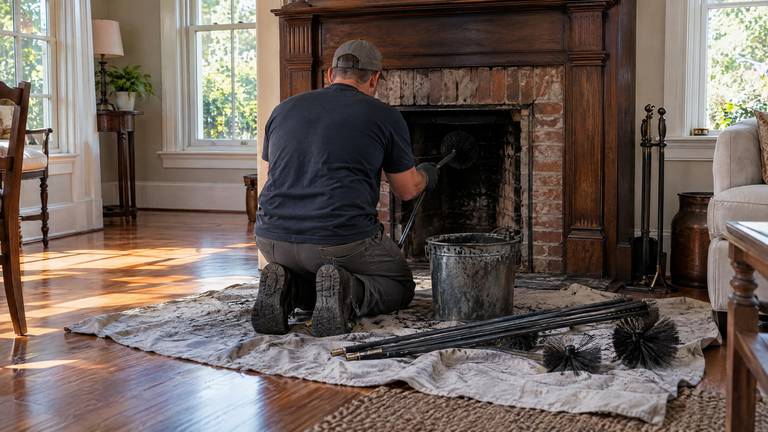
Removing hardened creosote from a chimney in Midway
Unseasoned wood and heavier creosote
EPA guidance explains that burning unseasoned wood takes a lot of energy just to drive the water out of the logs. That produces more smoke, and the extra smoke deposits more creosote as it moves up the chimney.
EPA describes well-seasoned wood as darker and lighter in weight, sounding hollow when two pieces are knocked together, and suggests checking it with a wood moisture meter. After removing the glaze from your Midway chimney, we talk through the firewood you burn and how to tell when it is ready. Wood that hisses, steams or smokes heavily as it burns is a common sign that it is still wet.
A chimney cap while the treatment dries
Rain falling into an open flue can rewet a drying poultice. The PCR data sheet recommends a chimney cap to protect the material while it dries, which makes the cap part of the plan for an uncapped chimney.
A sound cap on your Midway chimney stays as it is. Where there is none, or the cap is damaged, the options are explained and a new cap is priced as its own line, so you can decide with the full picture. A sound cap also keeps rain and debris out of the clean flue once the job is finished.
A written record of the removal
After removal, you receive a written note of what was found, the method used, the areas treated and the condition of the liner once it was clean. That record is useful when you sell the home, change how you heat or book the next inspection.
It also tells the next technician what to look for. If deposits return faster than expected, the record helps us trace why and adjust the advice for your Midway fireplace. Keep it with the house papers, and share it with any buyer who asks about the fireplace.
Keeping glaze from coming back
Removal treats the deposit that is there now. Keeping it from returning depends on the conditions EPA describes: dry, seasoned wood, enough air for the fire to burn cleanly and a flue that warms up as the fire burns. None of those need special equipment, only attention to the wood and to how the fire is run.
We give you practical guidance for your fireplace or stove in Midway, and a yearly inspection shows how quickly anything is building up. That yearly check is exactly what NFPA's inspection advice is meant to provide.


