
Our Process
How chimney waterproofing is done in Midway
Absorption, leaks and what a repellent changes
Water repellents are most effective at reducing the water that brick absorbs, Technical Note 6A notes, while most water that penetrates a wall gets in at separations and cracks between brick and mortar or at junctions with other materials. A repellent changes the first and does little for the second.
A straight estimate therefore separates the two. If your Midway chimney is absorbing rain through sound brick, a repellent can help. If water is entering at a joint, the flashing or the crown, the repair for that entry point comes first and is priced on its own.
A test area before the whole chimney
Manufacturers and the Brick Industry Association both recommend testing first. Instructions for a water-based siloxane repellent ask for a small test area on each type of surface before general application, and Technical Note 6A suggests treating half of a test area that shows the full range of brick colors so treated and untreated brick can be compared.
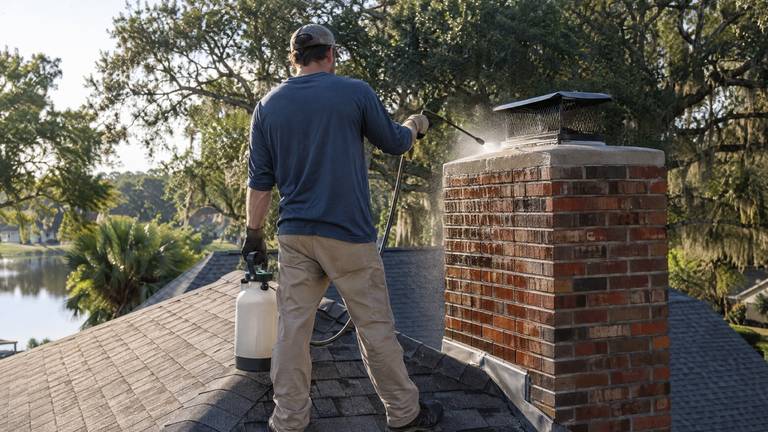
On your Midway chimney we pick an area you can see from the ground, treat it and let it dry before the rest is done. You judge the look with your own eyes, and the rest of the chimney is treated only after you agree.
Painted or glazed brick and repellents
Penetrating repellents need open pores to soak into. One siloxane repellent's maker rules out painted or glazed brick and tile, and Technical Note 6A warns that a penetrating coating typically will not work over an existing film-forming one.
If your chimney has been painted or coated, a standard repellent may be the wrong product. We explain what the existing finish allows, whether it would have to be removed first and what that involves, before recommending any treatment. Sometimes the sound answer is to repair the joints and the paint and leave the repellent out.
Enough product for the masonry to take
How much repellent a chimney needs depends on how porous its surface is. One water-based repellent's data sheet gives coverage ranges that differ for porous brick, dense brick, stucco and stone, and asks that the product not be thinned. Porous brick takes up more product than dense brick, and one chimney can have both.
A thin coat saves product and shortchanges the chimney. Our crew applies to saturation as the maker directs and records the product used, so the treatment on your Midway home matches what the estimate described.


