
Our Process
How glazed creosote is removed in Markham
Annual inspection and creosote
NFPA 211, the national standard that covers chimneys, fireplaces and vents, sets a yearly inspection for soundness, deposits and proper clearances, and calls for cleaning whenever that inspection shows it is needed. The NFPA's safety tips give homeowners the same advice in plain terms: a qualified professional should clean and inspect the chimney every year.
A yearly check shows how fast deposits are returning, well before they become a removal job. After removing creosote from your Markham chimney, we suggest a schedule based on how you burn, and you can book the next inspection whenever it suits you.
Why removal products stay in trained hands
The products that loosen glaze are strong. The PCR data sheet warns that it causes severe skin burns and eye damage and may cause respiratory irritation, calls for it to be mixed outdoors, and lists a respirator, eye protection, protective clothing and chemical gloves for anyone handling it.
That is a large part of why creosote removal is a professional job. Our crew mixes and applies the product with that equipment, keeps it away from people and pets and cleans every tool and container before we leave your Markham home.
A clear answer on using the fireplace
Between treatments, and until the liner has been checked, the fireplace may need to stay out of use. That restriction only helps if it is clear, so we write it down with the reason and the step that lifts it.
When the work is done and the flue has passed its check, you hear that in writing too. If the liner needs repair first, the fireplace stays unused until that repair is finished, and we explain why in plain terms. Keeping the fireplace cold for a few days is a small price for knowing the flue is sound.
Removal day at your chimney
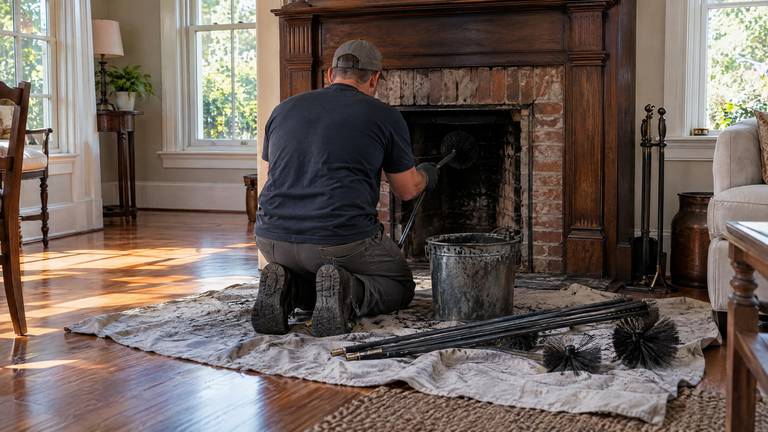
On the day, the room and roof are protected first and the fireplace opening is sealed. The product is mixed and applied to the flue, or the mechanical work is done, and the chimney is left to dry or cool as the method requires. Nothing goes into the flue until the protection is in place, and you are told how long each stage will take.
A follow-up visit clears the loosened deposit, sweeps the flue and inspects the liner. We walk you through what came out, what the flue looks like now and whether the fireplace is ready to use.


