
Our Process
How glazed creosote is removed in Longwood
How creosote forms in a wood-burning flue
EPA wood-burning guidance describes creosote as a combustible residue formed by wood gases that are not completely burned. As smoke rises into a cooler chimney, those by-products condense and stick to the flue walls as a black or brown residue.
Three conditions make more of it, according to the same guidance: burning unseasoned wood, a restricted air supply and a chimney that is cooler than normal. Knowing which applies to your fireplace in Longwood helps keep the deposit from building back after removal, and we talk it through with you once the flue is clean.
The follow-up sweep that finishes the job
When the poultice has dried, the PCR data sheet says the surface looks cracked and part of the material will already have dropped into the thimble, onto the smoke shelf or into the firebox. The rest comes off with normal sweeping. The sweep also removes any product left in corners the dried material did not fall from.
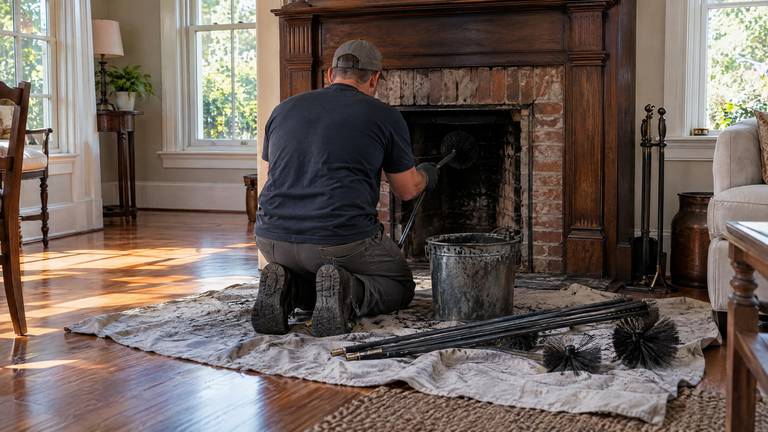
That sweep is part of the removal and appears on the estimate. Our crew brushes the flue, clears the smoke shelf and firebox, bags the debris and leaves the hearth clean, then shows you what came out of your Longwood chimney.
Mechanical removal and the risk to liners
Glaze can also be attacked mechanically with rotary heads and scrapers. The trade-off is the liner, since aggressive tools can damage clay tile and the mortar joints between tiles, and the maker of the PCR poultice presents it as a way to avoid cleaning methods it calls dangerous and potentially destructive.
Where mechanical removal suits the liner and the deposit, our crew uses tools sized to the flue and checks the surface as it works. Where it does not, a chemical treatment is the gentler route, and we explain the reasoning on the estimate.
Creosote removal before a home sale
A buyer's inspector who notes heavy or glazed creosote may recommend further evaluation, and a sale can stall while nobody knows the scope of the work or how long it will take. Sellers also want to know whether the fireplace can be advertised as usable.
A free flue inspection confirms the deposit, and the written plan gives the method, the visits and the price. The document is written so a buyer, a seller and their agents can all follow it, and removal can be timed to fit the closing.


