
Chimney Services
Getting the chimney cap right in Longwood
Chimney caps in Longwood replaced by our family-owned team after a free look at the flue top.
Measure the flue tile before choosing a cap
Flue tiles come in square, rectangular and round shapes, and their outside size decides which caps can fit. A bolt-on cap has to slide over the tile and clamp to it, so a measurement taken at the top is the only reliable one. Sizes guessed from the ground or from an old receipt often miss.
We measure each tile, note how far it rises above the crown and check that it is sound enough to hold a clamp. Those three findings set the choice between a single-flue cap, a larger crown-mounted cap or a cap made to order.
Stainless steel, copper or painted steel
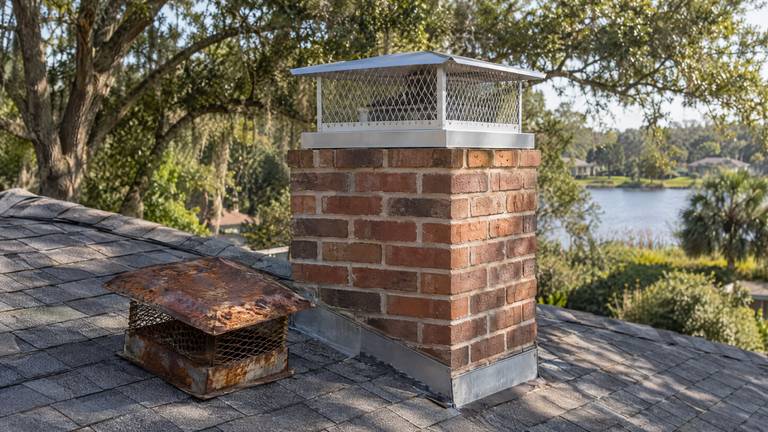
Stainless steel is the usual choice for chimney caps because it resists rust and holds its shape. Copper costs more, weathers from bright to brown to green and suits some homes by design. Painted or galvanized steel costs least at purchase and is the first to rust once its coating wears.
The Brick Industry Association advises that a metal rain cap should be corrosion-resistant. We show you the metals available for your flue size, how each will look on your roof and the written price of each option.
Water in the firebox and the cap
Water on the hearth, a rusty damper or a musty smell after rain often starts at an open flue. A cap is the first thing we check, because it is the simplest fix when it is the cause.
Leaks also come through cracked crowns, loose flashing and porous brick, and a new cap does nothing for those. We trace where the water enters before recommending a cap, so you do not pay for one part while another keeps leaking.
Checking your cap from the ground
You can learn a lot about a cap without climbing. From the yard, look for a lid that sits crooked, mesh that is bent or missing, rust streaks below the cap and debris or nesting material poking out of the sides.
After a strong storm, a quick look from the ground is worth doing. If anything looks different, call us instead of going up yourself. A loose cap can often be refastened before it falls, which keeps the job smaller.


