
Chimney Inspection
Chimney inspection details for Longwood homes
Local specialists, upfront pricing and a 100% satisfaction guarantee on every inspection visit in Longwood.
The damper and the throat
We open and close the damper, check how the plate seats and look for rust, warping or a broken handle. A damper that no longer seals lets conditioned air escape and lets rain or insects in while the fireplace is idle.
Rust on the plate is also a clue, since it often means water is reaching the throat from above. If a throat damper cannot be repaired, a top-sealing damper at the chimney top is one alternative. We explain which option fits the flue and the way you use the fireplace, and each option is priced separately so you can compare them.
Accessible attic and crawl space sections
Where the chimney passes through an attic or crawl space that can be entered safely, that section shows things no other view can. Clearance to framing, stains on nearby wood and the condition of the chimney walls are all visible there.
We only inspect areas we can reach without removing permanent finishes. If a section is closed in, the findings say so, and we explain whether opening it would answer a real question. Stains found in the attic are compared with the roof junction above them, which often narrows where water is entering.
Nests and animals in the flue
Birds, squirrels and other animals can enter an uncapped flue or a torn screen. Nesting material can block the passage and hold moisture against the lining.
Chimney swifts nest inside chimneys and are protected by the Migratory Bird Treaty Act, so an active nest limits when the flue can be disturbed. We identify what we see and explain the options and timing before any removal is planned. Once the flue is clear, a properly fitted cap keeps the next visitor out.
Reaching the chimney top safely
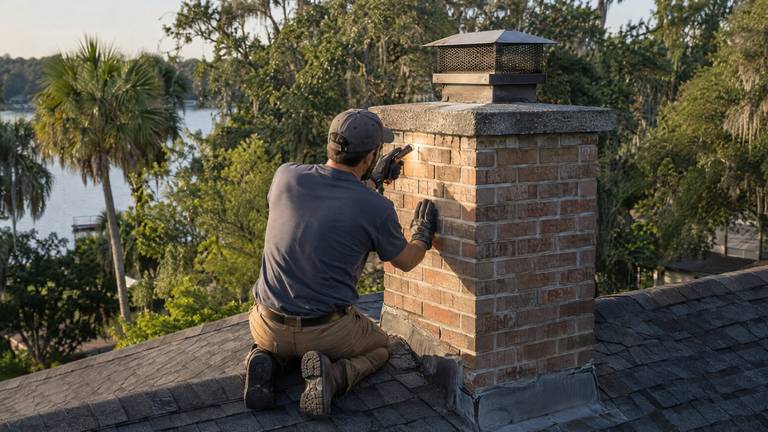
Much of an inspection happens on the roof, so access is planned before anyone climbs. Pitch, roofing material, wetness and the height of the chimney all affect how the top can be reached.
When the roof can be walked safely, we inspect the top directly. When it cannot, we use what can be seen from ladders and the ground and say plainly which items were not checked at close range. The findings never treat a part as sound simply because it was out of reach.


