
Our Process
Chimney animal work on Lake Mary homes
When young swifts fall into the fireplace
Nestlings sometimes drop from a swift nest onto the smoke shelf or into the firebox. In that case the Fish and Wildlife Service points homeowners to a migratory bird rehabilitator, who can say whether the young birds should go back to the chimney or need care. Do not try to feed them or return them to the flue yourself.
Keep the damper closed, leave the young birds where they are and keep pets away while you make that call. Our team can explain the chimney side, such as whether the damper is sealing properly, and schedule the rest of the work for after the nesting season.
What the code asks of a screened cap
For masonry chimneys, the Florida Building Code sets the rules for spark arrestor screens. Together, the screen's openings must give at least four times the free area of the flue outlet, and no single opening may let through a sphere over 1/2 inch or stop one under 3/8 inch.
The screen material also has to stand up to heat and corrosion at least as well as 19-gage galvanized steel or 24-gage stainless. Those rules keep embers and animals out without choking the draft, and they are the standard we size caps to on Lake Mary chimneys.
Chimneys with more than one flue
A masonry chimney can carry two or more flues, and each one is a possible way in. Protection can be a separate cap on each flue or one larger cap that covers them all, as long as every flue keeps the open area the code requires.
We measure each flue on your Lake Mary chimney and explain which approach suits its layout. Leaving one flue open after capping the others only moves the problem, so the estimate lists every flue we found. Flues that serve other appliances keep their own terminations, and we note any flue that is unused so you know its status.
Other birds on or in the chimney
Swifts are not the only birds that use chimneys. Nests appear in the gaps of damaged caps, on crowns and inside open flues. The Migratory Bird Treaty Act prohibits taking protected migratory birds without authorization, and that protection covers many native species.
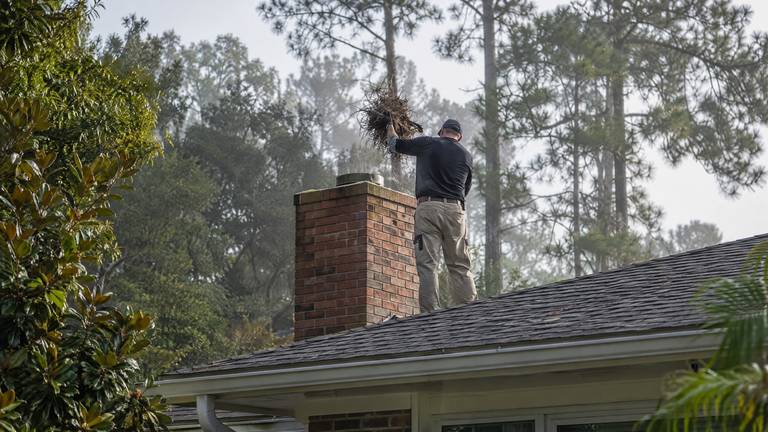
So we identify the bird before the nest is touched. If it is protected and active, the chimney work on your Lake Mary home waits. If the nest is empty or the species is not protected, our specialists clear it and close the entry. Birds nesting on top of a cap rather than inside the flue can usually be handled once the nest is empty, and the cap is then checked for gaps.


