
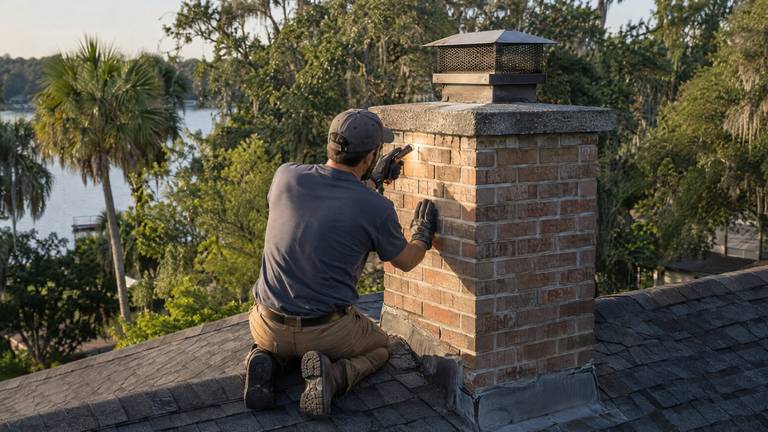
Chimney Inspection
Inside a chimney and fireplace inspection
Clear findings from a locally owned company, with nothing hidden in the price.
Flashing where the chimney meets the roof
The joint between the chimney and the roof is a frequent path for water. We check the base flashing along the roof, the counterflashing set into the masonry above it and the sealant at each edge.
Loose laps, rusted metal and sealant used in place of proper flashing all appear as findings. We also look at the uphill side of the chimney, where leaves and water collect. Where the roof side of the joint is the problem rather than the chimney side, we say so plainly, so the right trade handles the right part and you do not pay twice for the same leak.
Brick faces and mortar joints
Every face of a masonry chimney gets a look for cracked or flaking brick, open joints, leaning and white mineral deposits. Those deposits show where water has moved through the wall and dried at the surface.
We note where the damage is concentrated and whether it sits at the surface or deeper in the joint. Damage on one face only can point to how rain reaches the chimney, while damage near the roof line can point to the flashing. That tells you whether repointing, brick replacement or a larger repair is worth pricing, and in what order the work makes sense.
Factory-built units and their listing
A factory-built fireplace and its metal chimney are tested and listed together, and the Florida Building Code requires them to be installed according to that listing. The data plate, often near the firebox or behind a panel, names the model.
Where we can reach the label, we record the model and check that the visible chimney parts match the system. Mixed parts from different makers are noted, because the listing covers only the combination that was tested. The model number also tells you which replacement parts and instructions apply if a repair is needed later.
Chase top and storm collar
A metal chimney inside a framed chase is closed at the top by a metal chase cover, with a storm collar around the pipe. When the cover sags or rusts, water can collect and run into the chase.
In one fireplace maker's instructions, the chase top has to pitch downward, away from the opening for the pipe. We check the slope, the seams, the collar seal and the cap above. Rust-through, standing water and a collar that has slipped down the pipe are each noted with a recommendation to repair or replace the part.


