
Chimney Repair
Stopping water at the chimney
Every likely entry is checked, so the repair answers the whole leak.
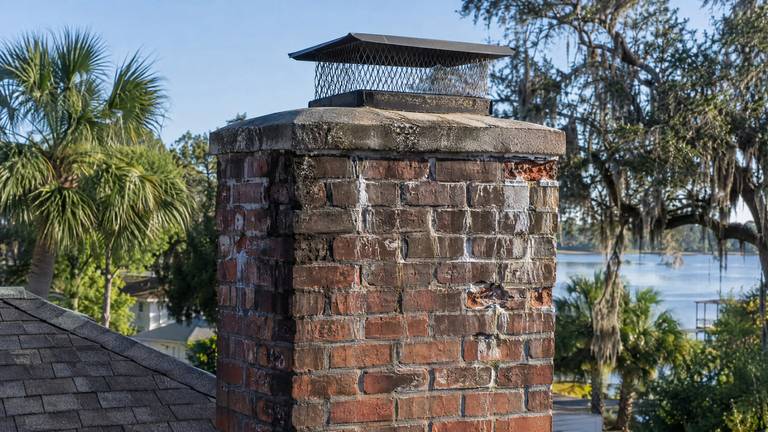
Open mortar joints
Mortar joints wear faster than the brick around them. Once they open, rain moves into the wall with every storm and comes out inside as dampness or stains.
Repointing removes the loose mortar to a sound depth and packs the joint with new mortar. The National Park Service advises that new mortar be softer and more vapor permeable than the brick, so the joints keep taking the wear instead of the brick faces. The mortar we use is chosen for your chimney's brick, never simply the strongest mix we could buy.
Cracks in a stucco finish
Stucco sheds most rain, but cracks near the crown, at corners and along the roof line let water behind it. Once inside, water can soak the masonry or framing below without showing on the surface.
We sound the finish for hollow areas and look for stains below the cracks. Surface cracks can be patched and sealed. Where water has damaged what lies beneath, the finish is opened and the substrate is repaired first, because a new coat over wet material only hides the problem for a while.
The top of the flue tile
The flue tile should stand above the crown so water on the crown does not spill into the flue. A cracked or chipped tile top lets water run between the tile and the masonry around it.
The height and condition of the tile at the crown are checked, along with the sealed joint around it. A damaged tile top is repaired or protected under a cap as part of stopping the leak, and the repair is described in the estimate with the reason it is needed.
Paint and coatings on brick
Paint and glossy sealers form a film on the brick surface. Water that gets in through a crack or joint cannot leave through that film, so it stays in the masonry and pushes the surface off.
Where a coating is part of the leak problem, we explain the options, from repairing the cracks it covers to removing failing coating before a breathable treatment. Each step is priced separately, and none is recommended unless the brick underneath needs it.


