
Our Services
What our chimney inspection covers in Heathrow
Here is what our chimney professionals look at during a free inspection in Heathrow.
Chase top and storm collar
A metal chimney inside a framed chase is closed at the top by a metal chase cover, with a storm collar around the pipe. When the cover sags or rusts, water can collect and run into the chase.
In one fireplace maker's instructions, the chase top has to pitch downward, away from the opening for the pipe. We check the slope, the seams, the collar seal and the cap above. Rust-through, standing water and a collar that has slipped down the pipe are each noted with a recommendation to repair or replace the part.
Inspection, cleaning and repair are separate
An inspection finds and explains conditions. A sweep removes deposits, and a repair changes damaged material. The three can happen on the same day, but they are different jobs with different prices.
The inspection is free. If a sweep or a repair is recommended, it appears in a written estimate on its own line, with the reason it is recommended. Nothing proceeds until you approve it, and you are welcome to take time to decide. If you do go ahead in the 72-hour window after the inspection, the work is 10% off.
Before a new appliance uses the chimney
A new appliance, a fuel change or an insert changes the demands on the flue. The lining must suit the appliance and be sized for it under the maker's instructions and the code.
We inspect the existing flue with the planned appliance in mind and tell you whether it can serve as it is, needs repair or needs a new liner. Bring the model name or the brochure if you have one. That answer before the purchase can save a return trip after it, and it keeps the venting cost from arriving as a surprise.
Reaching the chimney top safely
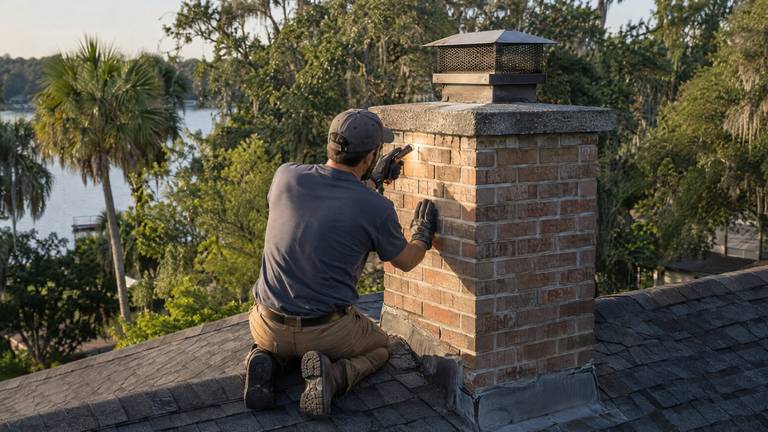
Much of an inspection happens on the roof, so access is planned before anyone climbs. Pitch, roofing material, wetness and the height of the chimney all affect how the top can be reached.
When the roof can be walked safely, we inspect the top directly. When it cannot, we use what can be seen from ladders and the ground and say plainly which items were not checked at close range. The findings never treat a part as sound simply because it was out of reach.

