
Chimney Services
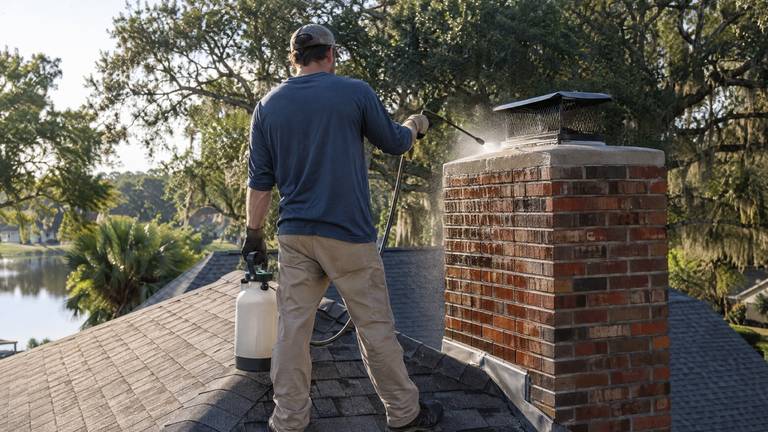
Inside a chimney waterproofing job in Heathrow
The cracks a repellent cannot bridge
Penetrating repellents line the pores. They do not fill gaps. Technical Note 6A says they seldom stop water penetration through cracks more than 0.02 inch wide, roughly the thickness of five sheets of copy paper, and that their effectiveness under wind-driven rain is limited.
Cracks wider than that need a repair of their own, whether that is repointing, brick replacement or stucco repair. Our specialists look for them on every face during the free inspection, because a repellent sprayed over an open crack leaves the water path in place. Where a hairline sits in otherwise sound mortar, we explain whether it needs work or can be left alone.
Planning for reapplication
No repellent is a permanent solution, and Technical Note 6A says they will require reapplication. It also warns that reapplying a coating too early may reduce the vapor permeability of the brickwork, which works against the reason for choosing a breathable product.
We keep a record of the product, the date and the area treated on your chimney, so the next treatment is timed on evidence instead of habit. When you call later, we check how the surface is performing before recommending another coat.
Chimney sealing before a home sale
A buyer's inspector may suggest sealing the chimney without saying whether repairs should come first. That leaves the seller guessing about scope and price, and the buyer unsure what will be done.
After a free inspection, you get a written plan: any repairs needed, whether a repellent is advisable and what each item costs. The plan is clear enough for both sides of the sale to read, and treatment can be fitted in before the closing when the weather cooperates.
Why we avoid film-forming sealers on chimneys
Film formers can bridge hairline cracks, Technical Note 6A acknowledges, but they also hold back evaporation through the brick face. When moisture gets behind them, the note warns of clouding and spalling, and it names acrylics, stearates, mineral gum waxes and urethanes among the film-forming products.
A chimney is exactly the kind of masonry that needs to dry out after rain, so a surface film is a poor trade on a chimney. We recommend penetrating, vapor-permeable repellents and explain the reason on the estimate.


