
Our Process
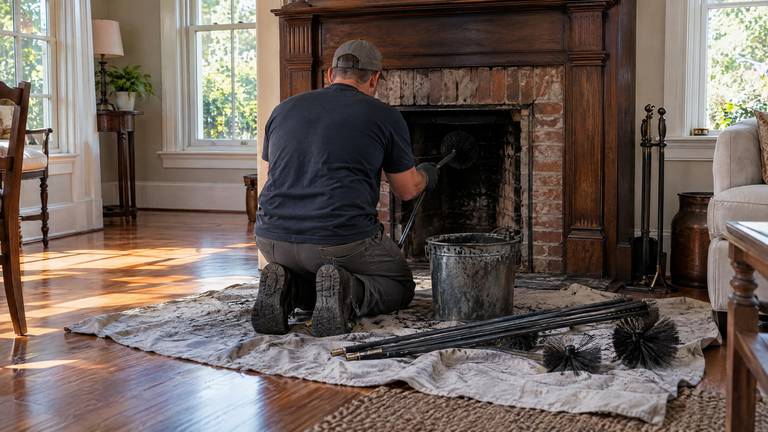
Removing hardened creosote from a chimney in Forest City
Assessing the deposit before choosing a method
Removal starts with a close look. The deposit's form, thickness and extent, the liner material, access from the top and bottom and the appliance connected to the flue all shape the method. A glaze confined to the upper flue is a different job from buildup that runs through the smoke chamber.
Our specialists record those details at the free inspection and explain them in plain terms. The estimate names the method, the likely number of visits and the follow-up sweep, so you know what the removal involves before you approve it.
Wood stoves with catalytic combustors
Each removal product has appliances it suits and appliances it does not. The Cre-Away data sheet says the powder is not recommended for wood stoves with catalytic combustors, and a stove's own manual sets out how its flue and connector are to be cleaned.
So we ask about the appliance before choosing a method. If your Forest City home heats with a catalytic stove, the removal plan is built around its manual, and we tell you which options that rules out. Where the manual allows only brushing, we say so plainly and plan the removal within those limits.
A fire starved of air
A restricted air supply is another cause EPA names: appliance doors kept closed, a damper not open wide enough, or air flow too weak to move heated smoke quickly up the chimney. DuraVent's liner instructions make a similar point, noting that wood burned slowly produces tar and other organic vapors that combine with moisture to form creosote.
A fire kept low and smoky for hours is the pattern both describe. We look at the damper, the air controls and how the fireplace or stove is used in your Forest City home, and suggest changes that give the smoke a quicker path out.
A clear answer on using the fireplace
Between treatments, and until the liner has been checked, the fireplace may need to stay out of use. That restriction only helps if it is clear, so we write it down with the reason and the step that lifts it.
When the work is done and the flue has passed its check, you hear that in writing too. If the liner needs repair first, the fireplace stays unused until that repair is finished, and we explain why in plain terms. Keeping the fireplace cold for a few days is a small price for knowing the flue is sound.


