
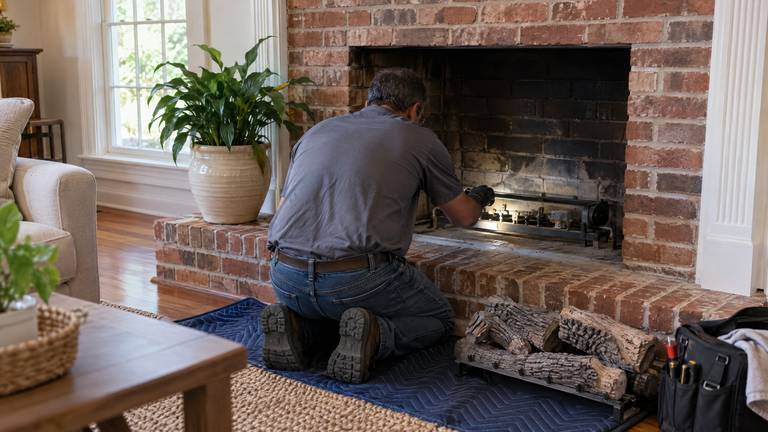
Gas Fireplace
Gas fireplace service for Crystal Point homes
Start with a free inspection, and we explain the fault before any part is ordered.
Cracked glass means the fireplace stays off
The glass front on a direct-vent fireplace is part of the sealed combustion chamber. Manufacturers say plainly that the appliance must not run with the glass removed, cracked or broken, because flue gases can leak into the room. If the glass cracks while the fire is burning, one maker says to keep the door closed until the fire is out.
Replacement glass is ordered as the complete glass and frame assembly the manufacturer supplies for that model, never a cut piece from another source. Glass replacement is its own service, and during a repair visit we tell you straight away if the glass or its frame needs it.
Direct-vent, B-vent or vent-free
Gas fireplaces fall into three broad groups. A direct-vent unit has a sealed glass front and draws outside air through a two-part vent. A B-vent unit uses air from the room and sends exhaust up a vent pipe. A vent-free unit has no vent at all and burns in the room, with a sensor pilot that shuts it off if the oxygen in the room falls.
Each group has its own checks and its own risks, so identifying the type is part of the first look. The Florida fuel gas code lists vented gas fireplaces, vented fireplace heaters and unvented room heaters under separate standards, and the service steps in each manual follow the same split.
Service for a vent-free fireplace
A vent-free fireplace depends on a clean burner and a clean oxygen depletion sensor pilot, because that pilot is what shuts the unit off if room air runs short. One maker requires the burner and that pilot to be cleaned at least once a year by a qualified service technician, and more often in homes with pets or heavy lint.
The same manual describes the appliance as supplemental heat that must not be left burning unattended or while anyone is asleep. Dedicated vent-free service, including the sensor and room-size checks, is its own service, and we tell you during the visit if your fireplace belongs there.
Propane fireplaces need propane parts
A fireplace built for propane uses a different orifice, different valve settings and different pressures from a natural gas model. The rating plate says which fuel the unit was made for. Changing fuel is done only with the conversion parts the manufacturer lists for that model, and some units cannot be converted at all.
The tank, the regulator and the supply line belong to the propane supplier. On one maker's vent-free models, a tank running low changes the flame and can cause soot, so we ask about the tank level when a propane unit starts misbehaving. If the fault is in the supply, we tell you and leave that part to the supplier.


