
Our Process
How glazed creosote is removed in Crystal Point
Mechanical removal and the risk to liners
Glaze can also be attacked mechanically with rotary heads and scrapers. The trade-off is the liner, since aggressive tools can damage clay tile and the mortar joints between tiles, and the maker of the PCR poultice presents it as a way to avoid cleaning methods it calls dangerous and potentially destructive.
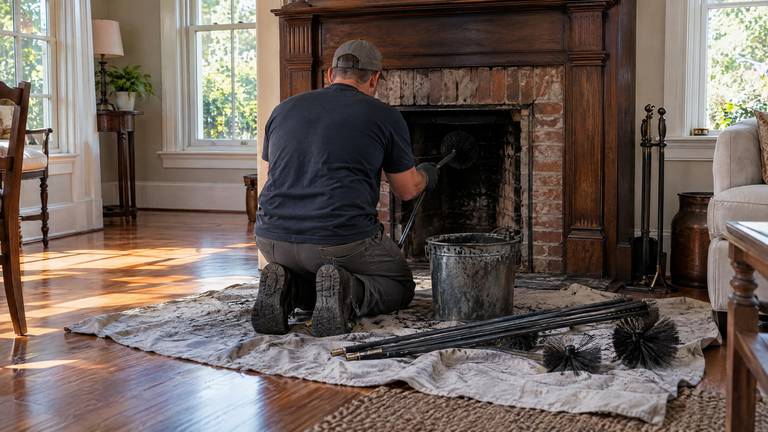
Where mechanical removal suits the liner and the deposit, our crew uses tools sized to the flue and checks the surface as it works. Where it does not, a chemical treatment is the gentler route, and we explain the reasoning on the estimate.
Stove connectors, inserts and the thimble
When a wood stove or insert is connected to the chimney, the connector pipe and the thimble where it enters the flue collect deposits too. The PCR data sheet specifically mentions covering the thimble during treatment, and the appliance's manual governs how the connector comes apart. A connector that is heavily coated inside can restrict the stove's draft as well.
Our crew disconnects and reconnects the appliance as its instructions direct, cleans the connector along with the flue and checks the joints before we leave. If a part is worn or corroded, you hear about it before anything is replaced.
A clear answer on using the fireplace
Between treatments, and until the liner has been checked, the fireplace may need to stay out of use. That restriction only helps if it is clear, so we write it down with the reason and the step that lifts it.
When the work is done and the flue has passed its check, you hear that in writing too. If the liner needs repair first, the fireplace stays unused until that repair is finished, and we explain why in plain terms. Keeping the fireplace cold for a few days is a small price for knowing the flue is sound.
Keeping glaze from coming back
Removal treats the deposit that is there now. Keeping it from returning depends on the conditions EPA describes: dry, seasoned wood, enough air for the fire to burn cleanly and a flue that warms up as the fire burns. None of those need special equipment, only attention to the wood and to how the fire is run.
We give you practical guidance for your fireplace or stove in Crystal Point, and a yearly inspection shows how quickly anything is building up. That yearly check is exactly what NFPA's inspection advice is meant to provide.


