
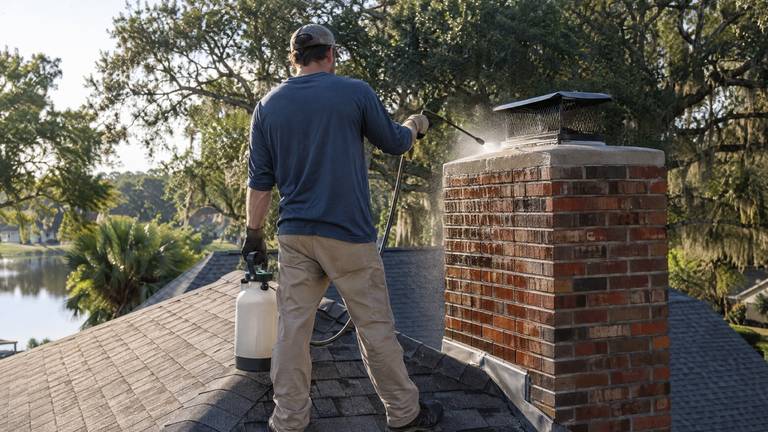
Our Process
Waterproofing a chimney in Crystal Point, in detail
Painted or glazed brick and repellents
Penetrating repellents need open pores to soak into. One siloxane repellent's maker rules out painted or glazed brick and tile, and Technical Note 6A warns that a penetrating coating typically will not work over an existing film-forming one.
If your chimney has been painted or coated, a standard repellent may be the wrong product. We explain what the existing finish allows, whether it would have to be removed first and what that involves, before recommending any treatment. Sometimes the sound answer is to repair the joints and the paint and leave the repellent out.
What an exterior repellent will not do
A chimney water repellent is an exterior treatment. One manufacturer states plainly that its water-based product is not intended for interior use or for resistance to hydrostatic pressure, and no repellent helps with rain falling straight down an uncapped flue or running behind loose flashing.
If your concern is water in the firebox, a stain on the ceiling or a musty smell, the free inspection looks for the entry point first. The fix may be a cap, flashing or crown repair, priced on its own, with waterproofing considered afterwards.
Painting a chimney after it has been treated
According to the ChimneySaver data sheet, surfaces treated with that repellent may be painted with a high quality oil-based paint, and testing is always necessary to confirm adhesion and compatibility.
If painting is in your plans, tell us before treatment. We factor it into the product choice for your Crystal Point chimney, so the two layers work together instead of against each other. Paint is a surface film, so it changes how the chimney dries, which Technical Note 6A treats as a real concern on exterior brick.
Caring for a treated chimney
A treated surface still needs occasional care. One repellent's data sheet recommends removing staining contaminants promptly and notes that occasional cleaning with mild detergent and water generally restores the treated surface's appearance.
Beyond cleaning, keep an eye on the parts a repellent does not protect: the cap, the crown, the flashing and the joints. A look after a big storm, and a call if something has moved, keeps small problems small. When the next treatment is due, we check the surface first instead of assuming it needs another coat.


