
Our Services
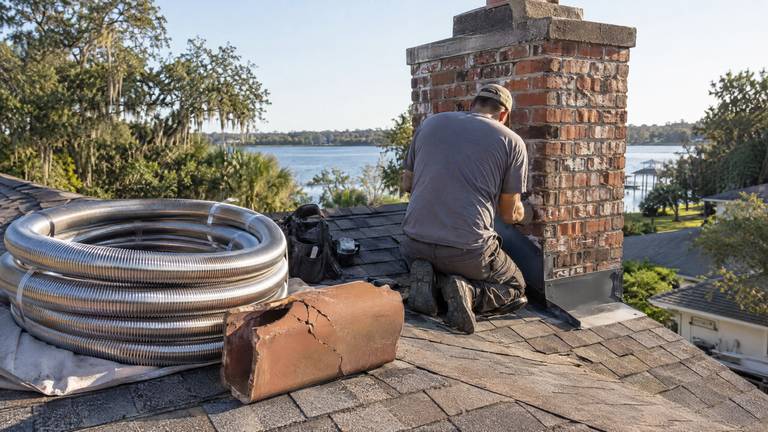
Steps in a chimney liner installation
Planning and installing a new flue lining in Chuluota, one step at a time.
Proving the route before ordering
Before a liner is ordered, the route is tested with a short piece of liner or a guide cone pulled through the flue. That shows whether the chosen size, with any insulation, can pass the whole way.
A liner forced through a tight spot can be crushed or torn, and that damage may not be visible from either end. Proving the route first keeps the installation day predictable and the price accurate. If the test piece will not pass, we know before the liner is ordered, and the plan can change without waste.
The top plate and how it is fastened
The top plate sits on the crown and carries the weight of the liner. One maker's instructions call for it to be fastened with silicone or masonry screws and for the liner to be cut flush at the top.
A top plate on a cracked crown or loose tile will not seal. We make sure the surface under it is sound, fasten the plate to the instructions and seal it so rain runs off rather than into the chimney. The seal between plate and crown is what keeps rain from running down between the liner and the old flue walls.
Height of the liner at the top
A chimney has to clear its roof. The Florida Building Code puts the top at least 3 feet above the point where the chimney passes through the roof, and no part of the building within 10 feet may reach higher than 2 feet below that top.
A liner's termination follows the chimney top, so we check the height before relining. Where the chimney falls short, a listed extension or another change is discussed as part of the plan rather than left for later. The height is taken with a measurement at the roof, never estimated from the ground.
Liners for wood-burning inserts
A wood-burning insert connects to the chimney through a liner, and the insert's installation instructions set the size and how the liner joins the insert collar.
The insert's instructions are read before the liner is planned, and we confirm that the chimney can carry the liner size required. Planning the insert and the liner together keeps the purchase and the installation from pulling in different directions. If the insert has not been chosen yet, we explain what the chimney can accommodate, so the choice starts from facts.


