
Our Services
How we repair chimney leaks in Chuluota
Across Chuluota, we trace chimney leaks and repair the part that lets water in.
Base flashing along the roof
Base flashing is the metal that lies on the roof and turns up the chimney face. Along the sides it is often installed as step flashing, woven into each course of shingles so every piece sheds water onto the course below.
When base flashing has been bent, nailed through or covered with sealant instead of properly lapped, water runs under it. We replace failed sections to follow the roofing maker's details and the building code. If the shingles around the chimney are too brittle to lift, we explain how the roofing will be handled before work starts.
White deposits as a moisture clue
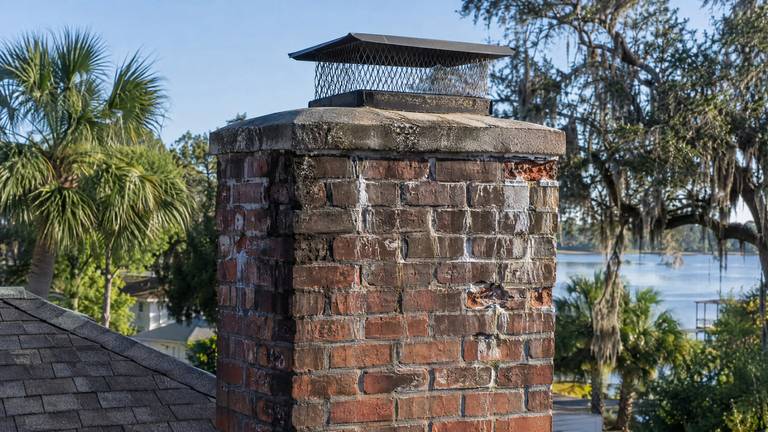
White powder on the chimney faces or inside the firebox is mineral material carried to the surface by water moving through the masonry. It shows where moisture has traveled and dried.
Light deposits can be removed by dry brushing, and harsh acids are avoided because they can damage brick. The deposits themselves are a clue rather than the problem, so we use their location to help trace where water is entering. Once the leak is stopped, new deposits should slow and then stop appearing.
The storm collar around the pipe
On a metal chimney, the pipe rises through a hole in the chase cover, and a storm collar clamped around the pipe above that hole throws rain outward. If it slips or its seal fails, water runs down the outside of the pipe into the chase.
Chimney makers' instructions describe how the collar is fitted and sealed against the pipe. We reset or replace the collar to those instructions without sealing the openings the system needs for ventilation. It is a small part, and it is often the whole answer to a leak on a metal chimney.
Letting the masonry dry
A chimney that has been soaking for months holds water in its brick and mortar for some time after the leak is stopped. Stains may stay visible and some dampness may linger inside.
After the repair, you learn what to expect and which signs would mean water is still getting in. Fresh moisture after a storm deserves a call, while an old stain slowly fading does not. Keeping the two apart saves you from worrying over a repair that is working.


