
Chimney Services
What a lasting crown repair takes
Same-day crown inspections are available in Chuluota when the schedule allows.
A crown that sheds water
A flat or dished crown holds water after every storm, and standing water finds every crack. The code says a masonry chimney's top must slope to shed water, and the slope should run from the flues toward the edges on every side.
From the roof we look for low spots, stains where water has sat and grime collected in hollows. If the slope is poor, a coating will not fix it, and the crown is reformed to drain. We explain what we see and how the new top will shed water.
Heat and rain limits for crown coatings
Coatings have weather rules. The same CrownCoat data sheet says surface and air temperature should not exceed 95 degrees Fahrenheit at application, and that the product should not go on a wet surface or when rain is expected within four hours unless the crown is protected.
On a Florida roof in summer, those limits matter. We schedule coatings for the cooler part of the day, check that the crown has dried out from the last storm and cover it if a shower threatens. A coating rushed onto a hot or damp crown wastes the product and your money.
Concrete pieces in the gutter
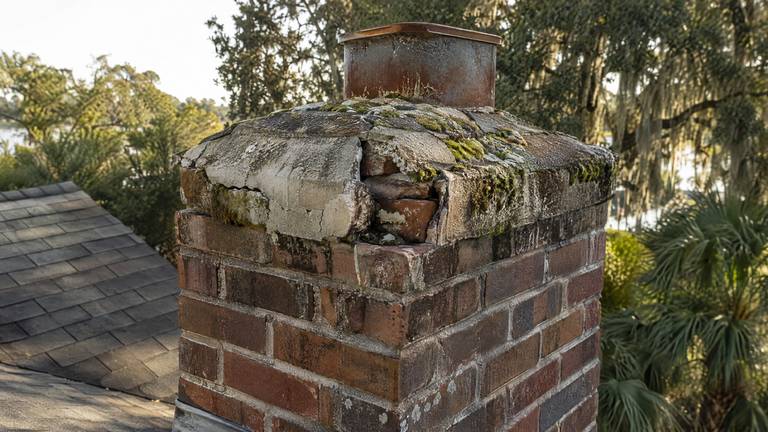
Small chunks of gray concrete in the gutter or on the ground by the chimney usually come from the crown's edge. They mean the rim is breaking up, and each piece that falls leaves a larger gap for water.
Keep the pieces if you find them and mention them when you call. We check how much of the edge is left and whether the rest of the crown is still solid, which decides between an edge repair and a new crown.
Crowns with layers of old patches
Some crowns carry several generations of repairs, with mortar patches, caulk in the cracks and a coating or two on top. Each layer may have held for a while, but together they hide the condition of the crown underneath. Caulk smeared across cracks can also keep a new coating from gripping the surface.
Adding another patch rarely solves anything at that point. We check what is under the layers, and if the original crown has failed, we recommend removing it and forming a new one. You see why before you decide.


