
Chimney Services
Our approach to chimney reconstruction in Cameron City
The findings and code rules that shape a chimney rebuild in Cameron City.
Rebuilding the part above the roof
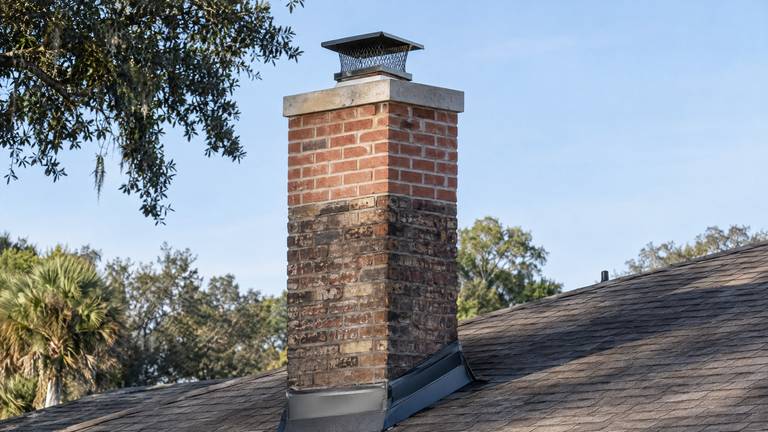
The section of chimney above the roof takes weather from every side and is usually the first part to need rebuilding. Loose top courses, cracked crowns and flashing that no longer seals tend to show up together on that exposed stretch.
Rebuilding above the roofline means taking that section down to sound masonry, relaying it with new brick and mortar, casting a new crown and tying the roof flashing back into the fresh joints. The roof around the chimney is protected throughout, and each part of the work is listed on its own line so you can see what the price covers.
Because the roof is already open around the chimney, this is also the natural moment to check the decking and underlayment beside it, and we tell you if any of it looks soft or stained.
Full-thickness walls in the new courses
Chimney walls must be at least 4 inches thick, nominal, under Florida's residential code, built of solid masonry units or of hollow units filled solid with grout. Rebuilt courses are laid to that thickness all the way around the flue.
Where a chimney holds more than one flue, the code also calls for masonry at least 4 inches thick between adjacent flue linings in most cases. We lay out the new courses around each flue before mortar goes down, so the rebuilt section matches the code and lines up with the chimney below it. Shortcuts such as thin brick slices never go into a rebuild of ours.
Where the old chimney was built thinner than the code now requires, we explain what the rebuilt section will need and how it will meet the older masonry below it.
A cricket on the high side of the roof
Water running down a roof piles up against the upper side of a chimney. A cricket, a small peaked diversion built behind the chimney, splits that flow and sends it around the sides instead of into the flashing.
The Florida Building Code, Residential, requires one where the chimney's dimension parallel to the ridge is more than 30 inches and the chimney does not meet the ridge. When a rebuild changes the chimney's footprint, or the roof around it is being redone, we check whether a cricket is needed and coordinate it with the flashing and your roofer.
A cricket is usually framed and covered by the roofer and then flashed to the chimney, so it goes into the schedule at the point where the new masonry is ready for its counterflashing.


