
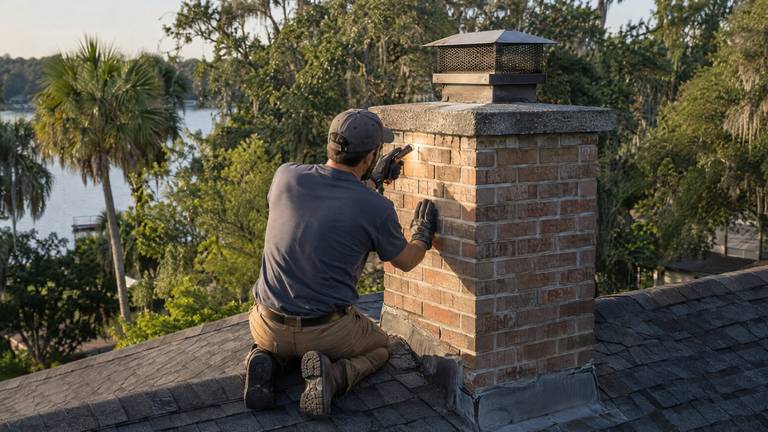
Chimney Inspection
Inspecting the chimney, flue and fireplace
No pressure after the visit, and every recommended job is priced in writing before you decide.
The damper and the throat
We open and close the damper, check how the plate seats and look for rust, warping or a broken handle. A damper that no longer seals lets conditioned air escape and lets rain or insects in while the fireplace is idle.
Rust on the plate is also a clue, since it often means water is reaching the throat from above. If a throat damper cannot be repaired, a top-sealing damper at the chimney top is one alternative. We explain which option fits the flue and the way you use the fireplace, and each option is priced separately so you can compare them.
Sorting what matters now from what can wait
Not every finding is urgent. A cracked crown during a dry month, a worn damper handle and heavy creosote before the first fire all call for different timing.
We tell you which items affect safe use of the fireplace, which ones prevent water damage and which ones can be planned for later. You decide the order, with every recommended job priced in writing before work begins. Grouping repairs that share roof access can also keep the total work simpler.
Connectors and thimbles through the wall
Where an appliance connects to a masonry chimney through a wall, the connector pipe and the thimble that carries it through the masonry are part of the inspection.
Rust and loose joints on the connector come first, then how it enters the flue and the clearance to nearby combustible material. A connector that pushes too far into the flue can restrict it, and one that has pulled back can leak exhaust. Problems here are listed with the appliance they affect.
Vent paths for gas fireplaces
A gas fireplace vents through the pipe or chimney its maker specifies, and each model has its own termination, clearances and approved parts. The inspection follows the visible vent path from the unit to its termination.
We look for separated joints, a damaged termination cap, blocked openings and signs of heat or moisture along the route. Appliance repairs follow the maker's instructions for that model and are priced separately. If the vent path cannot be traced, the findings say which section was out of view.


