
Our Services
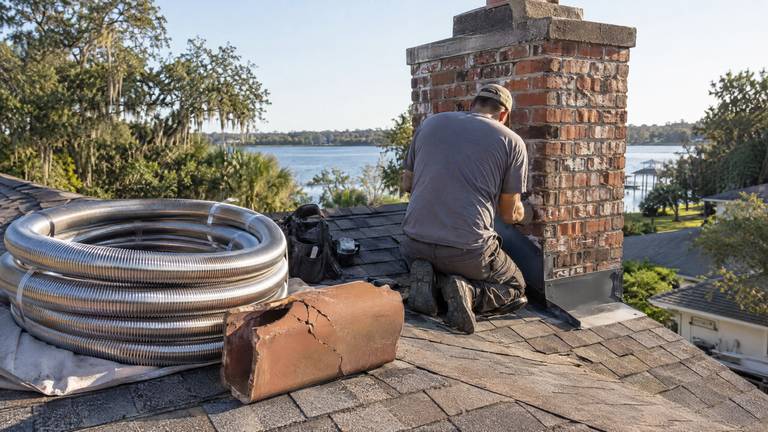
Planning a new chimney liner
The relining plan is explained on site, and a same-day inspection in Cameron City is possible when the schedule allows.
An inspection before any relining
NFPA 211 calls for a more thorough inspection before a flue is relined. The inspection establishes the condition of the passage, the structure around it and the appliance connection at the bottom.
That examination decides whether relining is the right answer, what size and type of liner suits the system and which repairs must come first. Our inspection is free, and the relining plan that follows is written down with its price before anything is ordered. If the inspection shows that relining would not solve the problem you called about, we tell you so before you spend anything on it.
Liners are listed for certain fuels
Each liner system is listed for particular fuels and appliance types. One maker's stainless liner, for example, is listed for oil, gas and solid fuel but excludes certain high-efficiency gas appliances and positive-pressure appliances.
We match the liner's listing to the appliance before recommending it. If an appliance change later brings a different fuel or a different type of appliance, the existing liner's listing has to be checked again rather than assumed. A liner listed for one fuel is not assumed suitable for another, even when the pipe looks the same.
Airspace around an interior chimney
The building code keeps masonry chimneys separated from combustible framing by an airspace, which is larger for a chimney inside the house than for one built entirely outside it. That space protects the framing from heat passing through the masonry.
When the airspace is missing or cannot be confirmed, the liner plan changes, often to an insulated system. We explain what we could see in the attic or crawl space and how the plan responds to it. Where framing touches the masonry, the finding explains why that matters for the liner plan and what a correction would involve.
Measuring the liner length
The liner has to reach from the appliance connection to the top of the chimney with a little extra for trimming. One maker's instructions measure from the bottom of the opening to the top and add about six inches.
We measure on site rather than estimating from the outside, since offsets and the connection point change the length. An accurate length keeps extra joints out of the flue and keeps the price stable. The measured length is written in the estimate next to the liner size.


