
Chimney Services
What creosote removal involves in Black Hammock
Assessing the deposit before choosing a method
Removal starts with a close look. The deposit's form, thickness and extent, the liner material, access from the top and bottom and the appliance connected to the flue all shape the method. A glaze confined to the upper flue is a different job from buildup that runs through the smoke chamber.
Our specialists record those details at the free inspection and explain them in plain terms. The estimate names the method, the likely number of visits and the follow-up sweep, so you know what the removal involves before you approve it.
Getting the treatment onto the flue walls
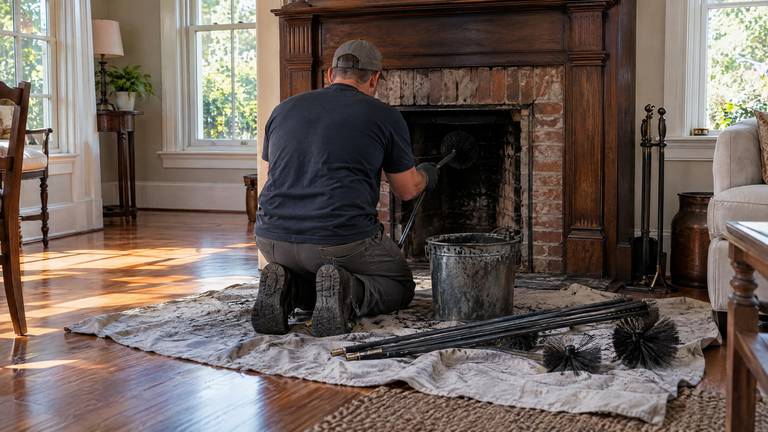
The PCR data sheet describes several ways to apply it. It can be brushed on where the flue is easy to reach, or loaded onto an applicator that is pulled up through the flue by a winch or sweeping rods, and a separate sprayer is made for glaze in the smoke chamber.
The method depends on your chimney's height, shape and access. Our crew chooses the applicator for your flue and keeps the product feeding evenly up its length, so the whole glazed section is treated instead of only the part within easy reach.
Cool flue walls and condensation
A chimney that is cooler than normal is the third condition EPA lists, because smoke condenses more readily on cool flue walls. Slow fires that never bring the flue up to temperature leave more of their smoke behind on the way out.
When we find glaze, we look at how the fireplace is typically used and whether the flue and the appliance suit each other, and we explain what we see in plain terms. Sometimes the fix is a habit, sometimes it is a change to the flue, and the estimate says which.
Creosote removal from clay flue tile
Masonry chimneys are often lined with clay flue tile bedded in mortar, the construction BIA Technical Note 19B describes. Those tiles and joints are what a removal method has to protect, and they are also where a crust of glaze can hide cracks.
On a clay-lined flue, our specialists favor methods that loosen the deposit without hammering the tile, and inspect the joints and tile faces once they are clear. Any cracked tile or open joint is explained and priced before the fireplace is used again. Clay tile that has been under a heavy crust for years deserves a close look, joint by joint, from the smoke chamber to the top.


