
Our Services
The parts of the system we inspect
Any service your inspection leads to is 10% off when booked within 72 hours.
Looking down the flue from the top
From the chimney top, the visible part of the flue lining says a great deal about the system. We look for cracked or shifted tile, gaps at the joints, heavy deposits and anything lodged in the passage.
A lining that is continuous and intact keeps heat and exhaust inside the flue and away from the masonry around it. Where we cannot see far enough to judge a section, we say so. We then explain what further access would show before recommending any repair to the lining, so you are never asked to pay for work based on a guess about a part nobody could see.
Chimney height against the roof
How high a chimney has to stand is written into the Florida Building Code. The top needs 3 feet of clearance over its own roof penetration, and it must also sit 2 feet above anything on the building that is within 10 feet. A chimney that falls short can struggle to draw.
An addition, a new roof line or a second story built nearby can change how an existing chimney relates to the roof around it. We point out any shortfall we observe and explain what an extension or another fix would involve. Height is one factor among several in how a fireplace draws, so it is never presented as the only answer to a smoke problem.
Hearth extension in front of the opening
The hearth extension protects the floor in front of the fireplace from embers and heat. The building code requires noncombustible material and sets how far it must extend in front of and beside the opening.
We check that the hearth is intact, suits the size of the opening and has no cracks that could let heat reach the flooring below. Tile or stone added over the years is noted when it changes the arrangement, and so is a hearth that has settled away from the firebox. Any repair is described with the material it would use.
Reaching the chimney top safely
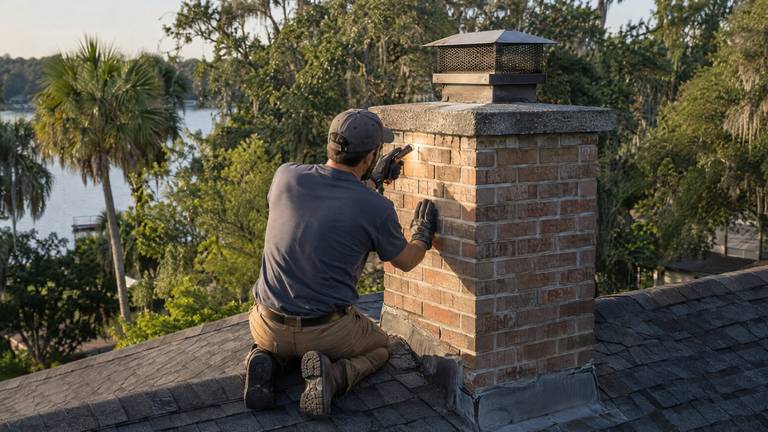
Much of an inspection happens on the roof, so access is planned before anyone climbs. Pitch, roofing material, wetness and the height of the chimney all affect how the top can be reached.
When the roof can be walked safely, we inspect the top directly. When it cannot, we use what can be seen from ladders and the ground and say plainly which items were not checked at close range. The findings never treat a part as sound simply because it was out of reach.


