
Our Services
Crown repair details that matter
You learn what a coating can fix, and what only a rebuild can, before any work starts.
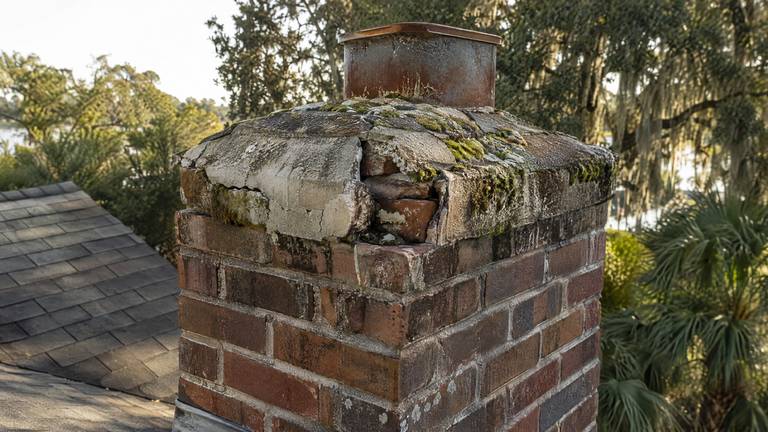
Crown coatings on a sound crown
A brushable crown coating forms a flexible waterproof skin over a crown that is still solid. The data sheet for one widely sold product, SaverSystems All Weather CrownCoat, requires a surface that is structurally sound, clean and dry, and the coating is brushed on thick enough to fill voids and small cracks.
On a solid crown with fine cracks, that skin is an economical fix. On a crown that is loose, crumbling or flat, it is money spent on a surface that will fail under it. We say plainly which crown you have and quote a coating only when it can do its job.
Loose brick under the crown
Water that gets past a failing crown soaks the top courses of brick first. Mortar joints soften, bricks loosen and faces begin to flake. A new crown set on loose brick will crack along the same lines as the old one.
We check the upper courses at every crown inspection. Where they are sound, the crown work goes ahead on its own. Where they are loose, we reset or replace them first and list that masonry work separately on the estimate.
Leaks at the roof line and leaks at the crown
Water that shows up on a ceiling beside the chimney can come from the crown, but it can also come from the flashing where the chimney passes through the roof. The two leak paths look alike from inside the house.
One visit covers all three, the crown, the joints at each flue and the flashing, and you hear which is to blame. When two are failing, each is priced separately, so a crown is never sold to cure a flashing leak.
Sun, heat and crown movement
A crown sits in full sun and heats and cools every day. Concrete, brick and the clay or metal liner all move by different amounts, and that repeated movement opens small cracks and pulls sealant away from the flues over time.
That is why a well-built crown includes bond breaks, flexible joints and reinforcement. When we repair a crown, we keep those details in place so the next few summers do not undo the work. It is also why rigid patches that cannot move with the crown tend to crack again along the same line.


