
Our Services
Chimney caps measured, fitted and checked
Local pros, upfront written prices and a 10% discount on work confirmed inside 72 hours of the inspection.
Stainless steel, copper or painted steel
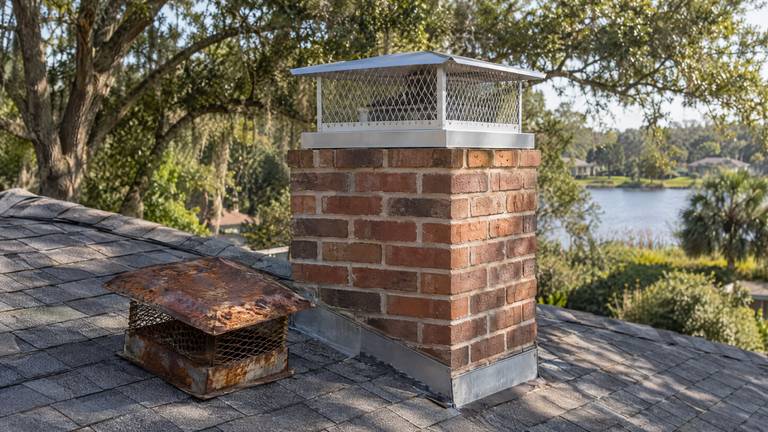
Stainless steel is the usual choice for chimney caps because it resists rust and holds its shape. Copper costs more, weathers from bright to brown to green and suits some homes by design. Painted or galvanized steel costs least at purchase and is the first to rust once its coating wears.
The Brick Industry Association advises that a metal rain cap should be corrosion-resistant. We show you the metals available for your flue size, how each will look on your roof and the written price of each option.
Lid height and a steady draft
A cap changes how exhaust leaves the chimney. The Brick Industry Association notes that the effect of a manufactured rain cap on the flow through a chimney should come from its maker. That is why lid height and style come from the product data and are never set by eye.
If your fireplace already drafts poorly, a new cap is not assumed to fix it. We look at the flue size, the chimney height and the fireplace opening, then tell you what a cap can change and what it cannot.
Repair a cap only when the parts are sound
Some caps can be put right with new bolts, a straightened lid bracket or a replacement screen. That works when the frame is square, the metal is solid and the cap still fits the tile.
When the metal is perforated, the mesh has rusted through or the frame is twisted, a repair only delays the next failure. We tell you which case you have, and if a repair is realistic we price it alongside a replacement so you can choose between them.
Rattling or whistling from the cap on windy days
A cap that rattles in the wind is telling you something has loosened. The lid bracket may have bent, a bolt may have backed out or the cap may be shifting on the tile. A high whistle can come from damaged mesh or a lid that has dropped out of line.
Noise is worth checking before a storm finishes the job. We find the loose part, tighten or replace it and show you what moved, so you know whether the cap has more life in it or needs replacing.


