
Services
How we rebuild chimneys in Alderene Park
The Florida Building Code and brick industry guidance, applied to rebuilds in Alderene Park.
A new crown on the rebuilt top
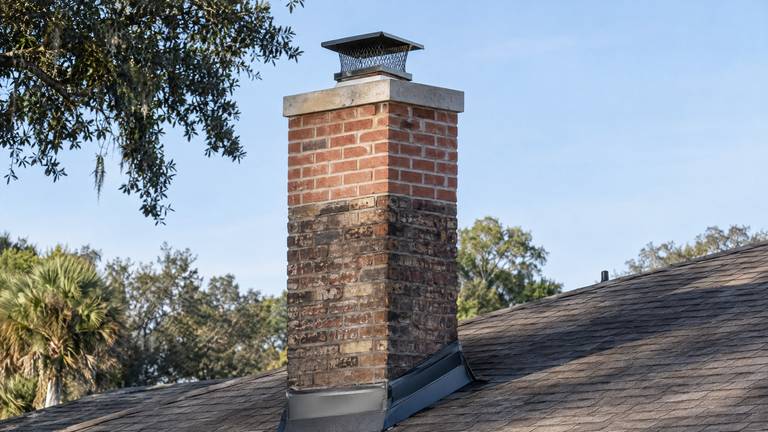
Every rebuilt masonry chimney gets a new cap on top, usually called the crown. The code lists four things for that cap in section R1003.9.1: concrete, metal or stone as the material, a slope for runoff, a drip edge, and a bond break sealed with caulk wherever a flue liner comes through.
The slope keeps rain from pooling, the drip edge throws water clear of the brick below, and the bond break lets the liner and crown move separately as they heat and cool. A thin mortar wash troweled over the top course does none of that well, so we form and cast a proper crown on every rebuild and list it on the estimate.
We also make sure the crown overhangs the brick far enough for the drip edge to work, and we seal the joint around the flue liner with a flexible sealant instead of hard mortar.
Setting the flue lining in a rebuilt section
When a clay-lined chimney is rebuilt, the flue tiles in that section are reset or replaced along with the brick. The Florida Building Code, Residential, calls for clay liners installed to ASTM C1283, laid in medium-duty, water-insoluble refractory mortar with smooth, tight joints.
The code also keeps a clay flue within 30 degrees of vertical, requires the liner to be supported on all sides and keeps a narrow air space or insulation between the liner and the brick around it. We explain how your liner will be handled before the old section comes down, so the new masonry is built around a sound flue.
If tiles in the section that stays are cracked or out of line, we tell you before rebuilding over them, since a sound new top on a damaged flue leaves the real problem hidden below.
Changing the chimney's look during a rebuild
A rebuild is a chance to change how the top of the chimney looks, from brick color to a corbeled band or a different crown profile. Some changes are simple; others affect the flue, the height rule or the load on the masonry below.
We discuss the look you want before materials are ordered and check it against the code and the chimney's structure. Anything that changes the shape or the price appears on the estimate before work begins, so the finished chimney is the one you agreed to, inside and out.
Taller or heavier decorative tops can need extra support or a different crown, so we price those changes separately and explain what each one adds to the job.


