
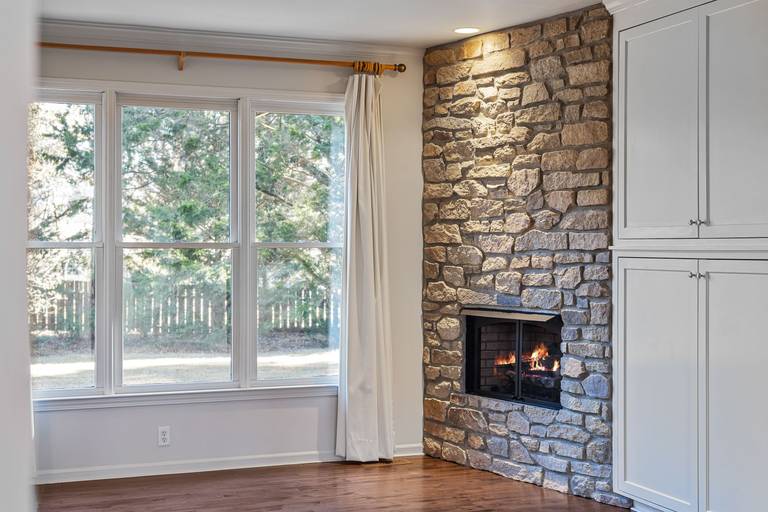
Distinguish natural stone from manufactured veneer
A stone appearance does not establish how the chimney was built. Natural stone can be part of a masonry assembly, while manufactured products may be an adhered veneer over a separate support. The repair method needs to match that construction. Advice written for fired-clay brick should not automatically be applied to a different stone product.
Natural stone chimney repair considers the stone, mortar and support together. Cultured stone chimney repair also needs the applicable veneer-system instructions. We identify what can be established from accessible areas and whether additional opening is needed before selecting materials.
Determine why pieces have loosened
A detached piece may reflect a local bond failure or a wider problem in the supporting assembly. Reattaching the visible piece without understanding the condition beneath it can leave other material vulnerable. We inspect the affected area and explain whether the concern is isolated or requires broader assessment.
Keep people away from an area with loose overhead stone. Do not pull at pieces or stand beneath them to take close photographs. Ground-level images and a description of when the change appeared are enough to begin the booking conversation.
Repair joints without trapping an underlying problem
Open or deteriorated joints can require removal of unsound material and repointing with a mortar appropriate to the stone and assembly. A harder mortar is not universally better. The compatibility of retained materials matters to how the repaired section performs.
Rock chimney repair may also involve resetting or replacing individual pieces. We discuss practical appearance limits when an exact stone or manufactured product is no longer available. A close color match alone does not establish compatibility, and a face coating should not be used to disguise loose or unsound material.
Keep veneer drainage and support in view
Stone veneer chimney repair can involve details behind the finish, including the supporting surface and the water-management system. Covering an opening or adding mortar should not obstruct a required drainage path. Where the assembly is framed, deterioration behind the veneer needs its own repair before the finished face is restored.
The chimney top and roof junction are examined when they relate to the damage. A failed chase cover can affect material below it, while a separate flashing defect may need roof coordination. The recommendation should explain which condition was found rather than treating every stone repair as a surface-only job.
If repair exposes a larger concealed defect, the next step is discussed before extending the work. This is especially important when a veneer that looks intact is supported by material that cannot remain in service.
Finish with a stable repair and clear care instructions
Your stonework assessment begins with a free inspection and a proposal for the affected area. The work description identifies retained pieces, replacement material and any associated backing or moisture repair. You should understand both the functional result and the expected appearance.
After completion, follow the curing and care instructions for the materials used. Avoid immediate pressure washing or applying an unapproved sealer to a fresh repair. Call (645) 465-4122 to discuss stone chimney damage in Seminole County, including any pieces that have already fallen or joints that continue to change.
