
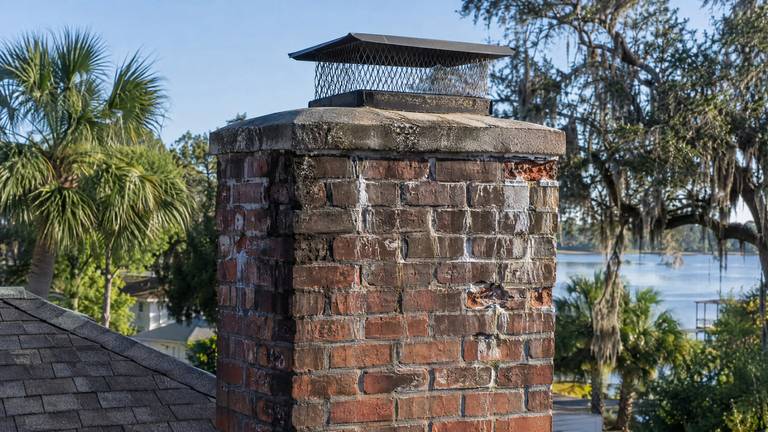
Chimney Repair
Stopping water at the chimney
No hidden fees, no guesswork and a workmanship warranty on the finished repair.
Ceilings, walls and interior finishes
Stopping the water does not restore stained paint, soft drywall or damaged flooring near the fireplace. Those finishes need to dry and may need replacement by the right trade.
You hear what we see inside and whether the material still feels wet. Interior repairs are included only when they are written into the estimate, so there is no confusion about who handles what. Waiting for the finish to dry before repainting keeps the old stain from bleeding through.
The top of the flue tile
The flue tile should stand above the crown so water on the crown does not spill into the flue. A cracked or chipped tile top lets water run between the tile and the masonry around it.
The height and condition of the tile at the crown are checked, along with the sealed joint around it. A damaged tile top is repaired or protected under a cap as part of stopping the leak, and the repair is described in the estimate with the reason it is needed.
Separating chimney work from roof work
Water that shows near a chimney does not always come from it. Roofing beside the chimney, a skylight, a vent or a gutter above can send water to the same ceiling.
Our inspection of the chimney and its flashing tells you plainly when the evidence points to a roof defect instead. That way the chimney repair covers the chimney, the roofer handles the roof and you are not asked to pay for work that would not stop the water.
Water coming in after hours
Heavy water through a chimney rarely waits for business hours. Our 24/7 line takes the call, helps you protect the room and arranges the next available visit.
When the permanent repair cannot happen right away, a temporary cover can close the flue top until repair day. The cover and the repair are priced separately, and you approve each one before the work is done.


