
Chimney Services
Sealing, repairing and rebuilding the crown
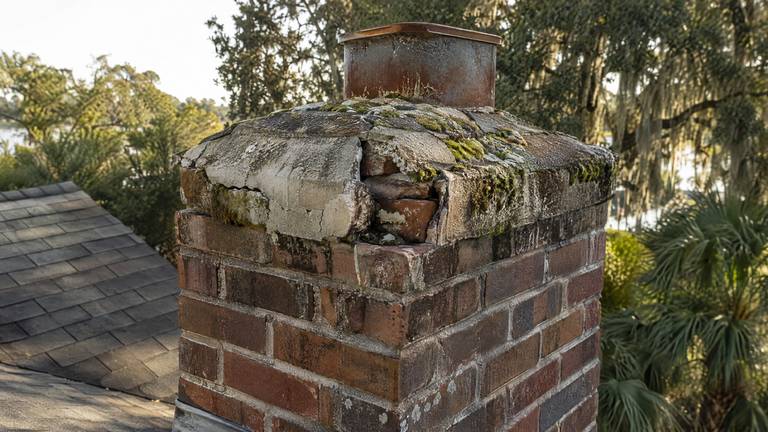
Crown repair from local pros who form every new crown with slope, overhang and a drip.
An overhang with a drip edge
Water that runs off the crown should fall clear of the brick instead of running down the face. A crown that projects past the brick with a groove or edge underneath, called a drip, breaks the path of the water so it drops away.
Masonry chimney tops need a drip edge under the Florida Building Code. Where a crown has no overhang, the Brick Industry Association suggests corbeling the top two courses of brick outward to form one. When we rebuild a crown, the overhang and drip are formed into it from the start.
Heat and rain limits for crown coatings
Coatings have weather rules. The same CrownCoat data sheet says surface and air temperature should not exceed 95 degrees Fahrenheit at application, and that the product should not go on a wet surface or when rain is expected within four hours unless the crown is protected.
On a Florida roof in summer, those limits matter. We schedule coatings for the cooler part of the day, check that the crown has dried out from the last storm and cover it if a shower threatens. A coating rushed onto a hot or damp crown wastes the product and your money.
Get the crown ready for storm season
From June 1 through November 30 the Atlantic hurricane season is open, and a tropical storm can drive rain sideways into every crack on a chimney top. A crown that lets in a little water all year can let in a lot in one night.
Spring is a good time to have the crown checked and sealed or rebuilt, with curing done before the heavy rain arrives. If a storm has already come through, we check for new cracks, lifted edges and damaged sealant at the flues.
Protecting the roof during crown work
Breaking out an old crown sends dust and concrete toward the roof and gutters. We cover the roofing around the chimney, protect the flue openings from debris and lower the old material instead of dropping it. Any cap removed for the work is stored where it cannot be damaged or blow away.
At the end of the day the roof is swept, the gutters near the chimney are cleared and the flues are checked for anything that fell in. If we notice roofing damage near the chimney, we mention it before we leave.


