
Our Services
What our chimney inspection covers in Oviedo
Here is what our chimney professionals look at during a free inspection in Oviedo.
Mantels and trim near the heat
Wood mantels, trim and decorative panels must stay a set distance from a masonry fireplace opening, and the allowed distance depends on how far the material projects. A remodel can move these parts closer than the original builder placed them.
The mantel, the surround and any shelving near the opening are checked against the clearances that apply, and we explain where each stands. For a factory-built unit, the maker's installation instructions govern these distances instead. If something sits too close, we explain the options, from moving the trim to changing the material.
Chimney checks after a storm
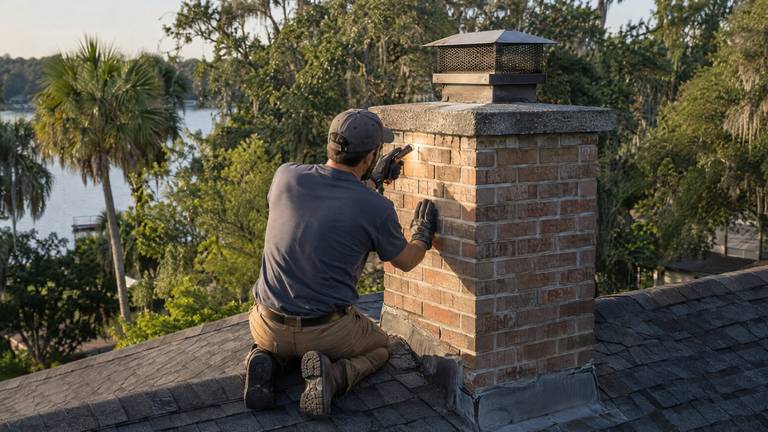
After strong wind and rain, the chimney top takes the first hit. We check the cap fastening, new cracks in the crown, lifted flashing and any debris that has fallen into the flue.
Inside, we look for fresh water in the firebox or on the damper and for new stains on nearby ceilings. Storm damage is described with its location and its likely effect, so repairs can be scheduled in a sensible order. If a temporary cover is needed until repair day, it is priced as its own item.
Stucco finishes over the chimney
A stucco finish covers the masonry or framing beneath it, so damage may show only as fine cracks, stains or a hollow sound when the surface is tapped.
We look closely at the finish around the crown, along the roof line and at the corners, where movement and water meet. Where the finish is damaged, we explain whether it looks like a surface repair or a sign of water behind it. A stucco repair that seals over wet material only hides the problem, so the source of the water comes first.
Vent paths for gas fireplaces
A gas fireplace vents through the pipe or chimney its maker specifies, and each model has its own termination, clearances and approved parts. The inspection follows the visible vent path from the unit to its termination.
We look for separated joints, a damaged termination cap, blocked openings and signs of heat or moisture along the route. Appliance repairs follow the maker's instructions for that model and are priced separately. If the vent path cannot be traced, the findings say which section was out of view.


