
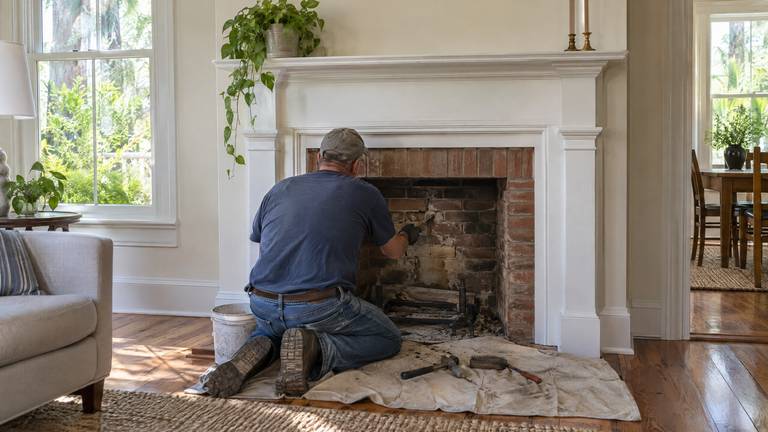
Fireplace Repair
From the base to the finished edge
Our experts measure the hearth extension and check its support before any material is ordered.
Trim and mantel around the opening
Hearth repairs often lead to a look at the trim around the fireplace. For masonry fireplaces, exposed combustible mantels and trim must sit 6 inches or more from the opening under the code, and within 12 inches of it, anything combustible may project only 1/8 inch for every inch of distance.
If new trim, a mantel or a surround is part of your plans, we measure against those figures before anything is fitted. Wood trim that has crept too close during an earlier remodel is noted in the inspection so you can decide how to deal with it. A mantel shelf higher up the wall is measured too, since its projection is limited by how far it sits above the opening.
Raised hearths and seating ledges
Many fireplaces sit on a raised hearth, sometimes deep enough to sit on. The raised section takes knocks from feet, logs and tools, and its front edge and corners chip and crack more than the flat surface. Seating ledges also take weight from people sitting on them, which puts extra load on the front edge.
Where the firebox floor is raised at least 8 inches above the extension, the code for masonry fireplaces allows a thinner extension in front. We check the heights before a repair so the rebuilt ledge and the extension in front of it keep to the thickness that applies. Chipped edges can often be rebuilt or replaced without disturbing the rest.
Checks made on a hearth inspection
A hearth inspection covers more than the crack you called about. On every visit our technicians look at the items below and note what they find.
You get the findings and a written price for each repair, with necessary work kept apart from optional changes. The measurements go into your written record for future reference.
- Type of fireplace, masonry or factory-built
- Surface finish and any loose, hollow or cracked pieces
- Thickness of the extension and the height of the firebox floor
- How far the extension reaches in front and to each side
- Support under the hearth where it can be seen
- Gaps at the fireplace face and the floor edge
- Distance from flooring and trim to the opening
- The join between the hearth and the firebox floor
Water stains around the hearth
Water that reaches the firebox during heavy rain can run forward onto the hearth, leaving stains, loosening tiles and softening grout. The hearth shows the damage, but the water comes from above. Staining that returns after every storm, or grout that stays dark long after the rain has stopped, is a sign the water is still arriving.
We repair the hearth once the source has been dealt with, since new tile over a wet base will fail. If water is still getting in, we tell you and arrange a separate chimney visit to trace it before the hearth repair is scheduled. The hearth base is checked for moisture before the new finish goes down.


