
Chimney Repair
Stopping water at the chimney
Every likely entry is checked, so the repair answers the whole leak.
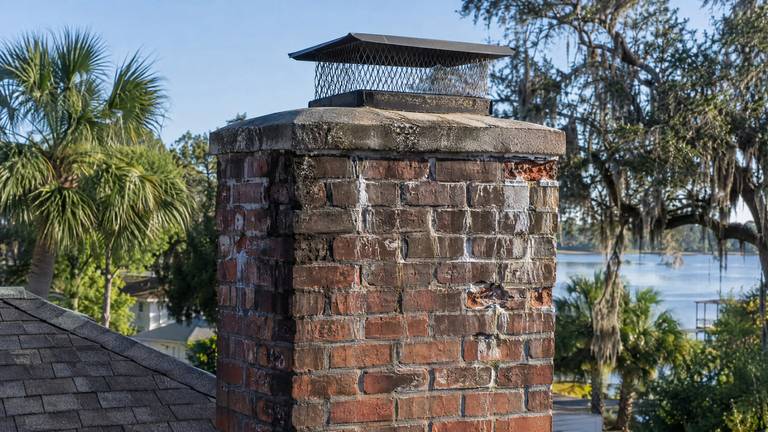
Brick faces that have flaked away
Brick that stays wet can lose its hard outer face. Once that face is gone, the softer core absorbs even more water and breaks down faster.
We cut out badly damaged units and replace them with brick matched as closely as we can in size and color. Repair comes before any water repellent, since a treatment cannot restore missing material. The estimate lists the number of faces affected and the work planned for each, so the scope is clear before we begin.
Chase covers that hold water
A metal chase cover on a factory-built chimney should shed water off its edges. When it sags or was installed flat, water sits in the middle and rusts through the metal.
One manufacturer's instructions ask for a chase top that falls away from the pipe opening so water drains off. We replace rusted or flat covers with ones shaped to shed water, sized to the chase and fitted with a collar. The replacement is measured on site, so the new cover fits the chase rather than a standard size.
Water repellents come after repairs
A breathable, penetrating water repellent can reduce how much rain sound brick absorbs. The Brick Industry Association advises considering such treatments only after the brick, the mortar joints and the other elements have been repaired.
Film-forming coatings can trap moisture inside the wall and push the brick face off. We use products that let vapor leave the masonry and apply them to the maker's instructions. A repellent is offered only where the brick needs it, and it is priced as a separate line from the leak repair itself.
When earlier repairs did not hold
A repair that failed may have been aimed at the wrong entry, made with the wrong material or overtaken by a new problem. We start by describing the current condition rather than assuming the earlier diagnosis was right or wrong.
Records of the earlier work help. So does the date of the first stain compared with the date of the most recent fresh moisture, since that keeps an old mark from being mistaken for a new failure. The new repair is then aimed at what the evidence shows today.


