
Chimney Services
Crown repair on Lake Mary chimneys, step by step
Sealed or rebuilt, each crown carries our workmanship warranty, plus a 100% satisfaction guarantee.
A crown that sheds water
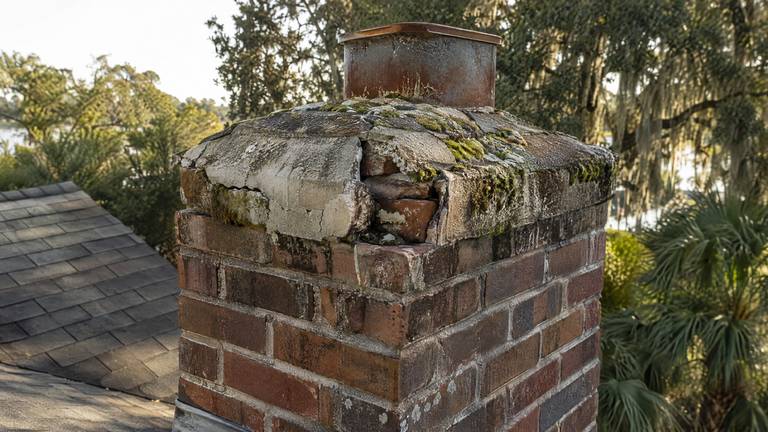
A flat or dished crown holds water after every storm, and standing water finds every crack. The code says a masonry chimney's top must slope to shed water, and the slope should run from the flues toward the edges on every side.
From the roof we look for low spots, stains where water has sat and grime collected in hollows. If the slope is poor, a coating will not fix it, and the crown is reformed to drain. We explain what we see and how the new top will shed water.
Curing time after a new crown
New concrete gains strength slowly and needs to keep its moisture while it does. A crown that dries too fast in hot sun can crack at the surface before it ever sees a storm, which is why curing is part of the job and not an afterthought left to the weather.
The mix we pour comes with its own curing directions, and following them may mean shading the new crown or keeping it damp for a set time. We tell you how long to wait before lighting the fireplace, and whether a coating or cap goes on the same day or on a return visit.
Signs a crown is letting water in
A failing crown rarely announces itself on the roof. More often the first signs are inside, as a damp patch on the ceiling or wall beside the chimney, water on the damper or a musty smell from the fireplace after rain.
Outside, look for dark wet bands under the chimney top, white powdery deposits on the upper brick and flakes of brick or concrete in the gutter. We connect those signs to the crown or to another entry point before recommending any repair.
Sun, heat and crown movement
A crown sits in full sun and heats and cools every day. Concrete, brick and the clay or metal liner all move by different amounts, and that repeated movement opens small cracks and pulls sealant away from the flues over time.
That is why a well-built crown includes bond breaks, flexible joints and reinforcement. When we repair a crown, we keep those details in place so the next few summers do not undo the work. It is also why rigid patches that cannot move with the crown tend to crack again along the same line.


