Chimney Services
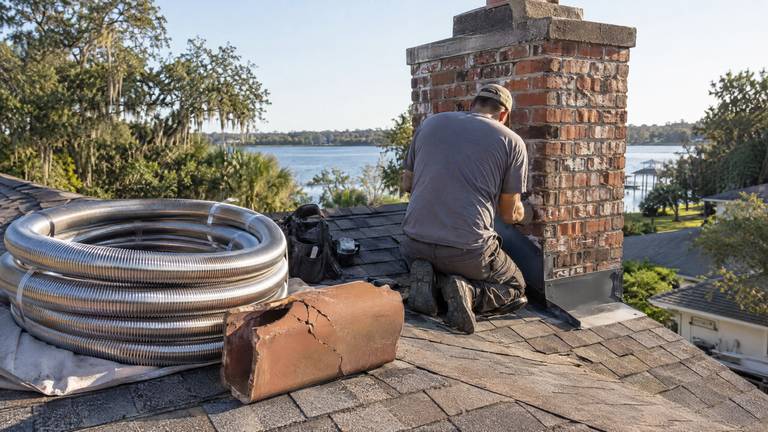
Liner installation details for Kolokee homes
The finished liner carries our workmanship warranty, and the bill carries no hidden fees.
An inspection before any relining
NFPA 211 calls for a more thorough inspection before a flue is relined. The inspection establishes the condition of the passage, the structure around it and the appliance connection at the bottom.
That examination decides whether relining is the right answer, what size and type of liner suits the system and which repairs must come first. Our inspection is free, and the relining plan that follows is written down with its price before anything is ordered. If the inspection shows that relining would not solve the problem you called about, we tell you so before you spend anything on it.
Clearances that cannot be confirmed
Where the space between the chimney and nearby framing cannot be seen or measured, the clearance is unknown. One liner maker calls for an approved insulation wrap in that situation.
When clearance cannot be confirmed from the accessible areas, you hear that from us, along with how the liner plan accounts for it. The finding is stated plainly rather than assumed, since concealed framing is where heat can do harm without being seen. If a finished wall or ceiling hides the chimney, we explain whether opening a small area would settle the question.
Clearing the flue before relining
Nests and debris in the flue have to be removed before a liner can pass. Some birds that nest in chimneys are protected under federal migratory bird law, which affects when an active nest may be disturbed.
We identify what is in the flue and plan the relining date around it. Once the liner and its cap are in place, animals no longer have an open path into the chimney. A nest found during the inspection does not end the project, it simply sets the timing.
When a liner is not the answer
Relining restores a passage inside a sound chimney. It does not repair a leaning stack, a failed crown or loose exterior brick, and it is a different job from repairing the existing clay lining in place.
When the structure needs rebuilding or the existing lining only needs a local repair, we say so and explain that option instead. You get the recommendation that suits the chimney, not the one that sells the largest job. When more than one approach could work, each is priced separately so you can compare them.


