Our Work
Inside a chase top replacement in Kolokee
Which metal part at the top is failing
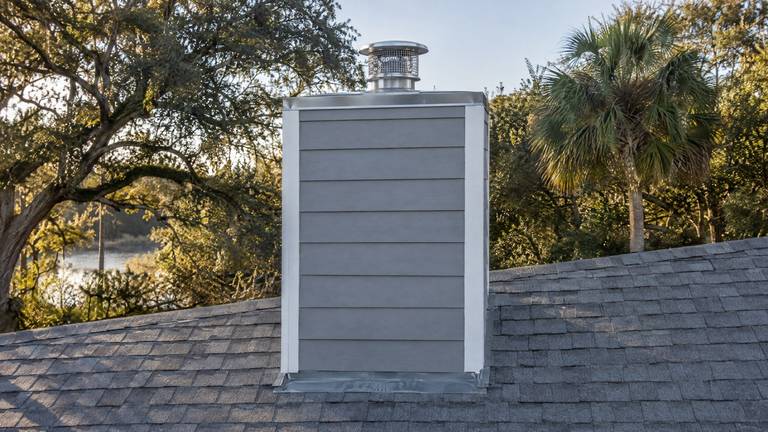
A framed chase is the boxed enclosure, usually sided to match the house, that hides the metal pipe of a factory-built fireplace. Its top is closed by a sheet-metal chase cover, and the pipe rises through a hole in that cover to a termination cap of its own. The two parts wear out separately. Knowing which part failed also tells you whether the fix is a listed part from the chimney maker or a cover fabricated to measure.
On a home in Kolokee our specialists look at both from the roof during the free inspection. A rusted cover under a sound cap needs a new cover, and a damaged cap on a sound cover needs the cap. You pay only for the part that is letting water in.
Why the chimney maker requires a chase top
A factory-built fireplace is tested and listed as one complete system, so the Florida Building Code has it installed and topped out exactly as its maker's instructions describe. Those instructions treat the chase top as part of the installation. The Majestic SB60 and SB80 manual, for example, states that a chase installation must use a chase top and that it may be field built from noncombustible material.
A missing, torn or makeshift cover is therefore more than a cosmetic problem. Our specialists fit a replacement that follows the instructions for the system on your roof and explain the relevant details before work begins. If the old top was never installed to those instructions, we say so and show you where it departs from them.
Sealing the storm collar where the instructions say
The storm collar is the metal band that wraps the pipe just above the cover collar and sheds water over the gap. In the Majestic manual, the gap between storm collar and pipe and the gap between storm collar and chase top are both caulked, and installers are warned to leave the cap's air holes open. Positioned correctly, it works like a small umbrella over the gap.
When we replace a cover, the storm collar is refitted or replaced and sealed only at those points. A collar that has slid down the pipe or split along its seam is one of the first things our specialists look for during the free inspection.
What you learn at the end of the job
When the new cover is on, we walk you through what was installed: the metal and gauge, where it is fastened, how the collar and storm collar were sealed, and the condition of the cap and deck we found.
You also get simple notes for the future, such as checking for streaks or lifted corners from the ground after storms. The new cover is backed by our workmanship warranty, and the whole visit to your Kolokee home by our 100% satisfaction guarantee. If anything we found needs a later visit, such as a cap part on order, the date and the reason are written down before we leave.


